- English
- French
- German
- Portuguese
- Spanish
- Russian
- Japanese
- Korean
- Arabic
- Greek
- German
- Turkish
- Italian
- Danish
- Romanian
- Indonesian
- Czech
- Afrikaans
- Swedish
- Polish
- Basque
- Catalan
- Esperanto
- Hindi
- Lao
- Albanian
- Amharic
- Armenian
- Azerbaijani
- Belarusian
- Bengali
- Bosnian
- Bulgarian
- Cebuano
- Chichewa
- Corsican
- Croatian
- Dutch
- Estonian
- Filipino
- Finnish
- Frisian
- Galician
- Georgian
- Gujarati
- Haitian
- Hausa
- Hawaiian
- Hebrew
- Hmong
- Hungarian
- Icelandic
- Igbo
- Javanese
- Kannada
- Kazakh
- Khmer
- Kurdish
- Kyrgyz
- Latin
- Latvian
- Lithuanian
- Luxembou..
- Macedonian
- Malagasy
- Malay
- Malayalam
- Maltese
- Maori
- Marathi
- Mongolian
- Burmese
- Nepali
- Norwegian
- Pashto
- Persian
- Punjabi
- Serbian
- Sesotho
- Sinhala
- Slovak
- Slovenian
- Somali
- Samoan
- Scots Gaelic
- Shona
- Sindhi
- Sundanese
- Swahili
- Tajik
- Tamil
- Telugu
- Thai
- Ukrainian
- Urdu
- Uzbek
- Vietnamese
- Welsh
- Xhosa
- Yiddish
- Yoruba
- Zulu
Design and Analysis of Mini Fire Fighting Robot
When we talk about how to make and study small firefighting robots, we're looking at a huge change in technology for responding to emergencies. A mini fire robot is a small, moving car that is designed to work in dangerous areas where human firemen aren't safe. These units are able to work in tight areas like underground caves, chemical plants, and narrow building lanes, suppressing fires precisely while keeping people away. These self-driving or remotely controlled platforms have been tested in the real world and through thorough technical analysis to show their worth in local fire departments, industry facilities, and dangerous material sites.
Understanding Mini Fire Fighting Robots
What Defines a Mini Fire Fighting Robot?
Small robots that fight fires can be used as frontline replacements in places where standard methods don't work. These guided cars have a frame that is less than 1.5 meters long and has thermal vision, self-navigation, and high-capacity water guns. They don't put people's lives at risk like full-size fire trucks do; they can go through doors, through garbage fields, and work in places with low air levels.
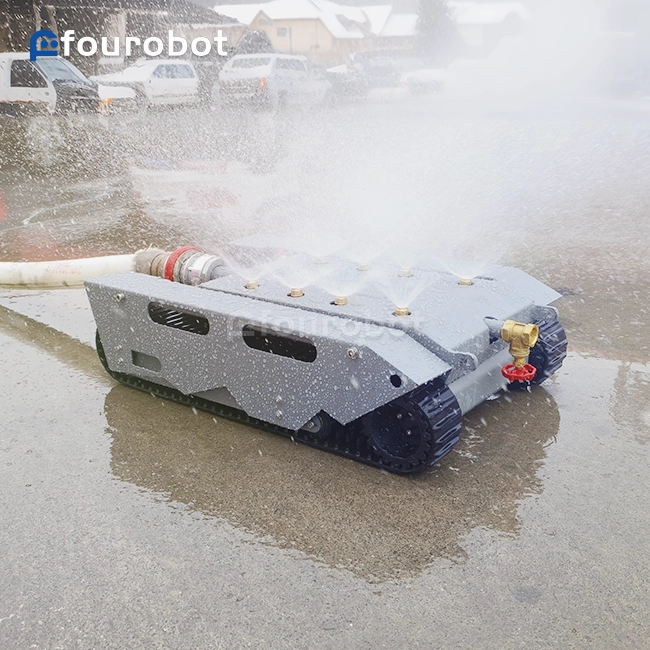
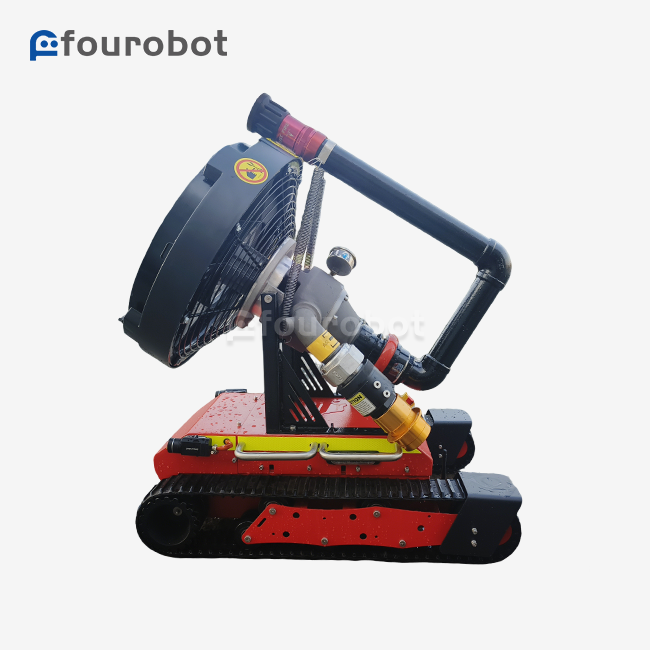
The basic structure is made up of three connected systems: motion platforms with high-torque electric motors; sensor arrays with LWIR thermal cameras and smoke penetration optics; and suppression mechanisms that can send 20 to 40 litres of water per second through directional nozzles. With thermal protection that can handle temperatures above 500°C, batteries can usually be used for two to four hours and still work.
Core Components Driving Performance
Many smaller rescue units today have many separate parts that work together. The moving part has two electric motors paired with rubber tracks, which allow it to go up and down 30 degrees and clear obstacles more than 150 mm high. This is important when going through fallen buildings or industrial pipe racks where the ground moves around randomly.
Using visible spectrum cameras and long-wave infrared monitors together, sensor fusion technology can tell what's going on through smoke and steam. Fire monitoring algorithms that are driven by AI look at patterns of heat to tell the difference between electrical fires, fuel fires, and battery thermal runaway events. This intelligence layer lets workers up to a kilometre away make smart decisions about how to silence.
The fire-fighting system has water guns with varying flows, foam input ports, and cooling sprays under the frame. This last part is very important for dealing with fires in electric vehicles because applying it directly to the battery sections stops the heat from spreading.
Design Principles Focused on Reliability
Engineering research shows that choosing the right materials and adding protection layers make things last longer. The frame is built to IP67 standards, which keeps water and dust out. Heat-reflective layers taken from aircraft use keep the inside temperatures below critical levels. The self-spraying water screen makes a shield around the robot, letting it move into flashover conditions that would instantly disable human workers.
The chemistry of a battery balances how much energy it holds with how stable it is at high temperatures. Lithium iron phosphate cells are better at stopping thermal runaway than other lithium-ion batteries. When you use COFDM radio transfer for multiple communication links, you can keep control even if the line of sight is blocked by buildings or thick smoke.
Comparative Analysis: Mini Fire Fighting Robot vs Traditional Firefighting Methods
Limitations of Conventional Approaches
When people do traditional firefighting, they face direct threats to their lives, such as flashover temperatures, building fall, and breathing in harmful smoke. Response times are slowed down when workers have to put on safety gear, set up water sources, and do scouting before going after fires. Access limitations make these problems even worse. For example, underground parking lots with 2-meter gaps, ocean ship vehicle decks with 1-meter vehicle spacing, and chemical facilities with explosive atmosphere classifications all create situations where human involvement is too dangerous. A mini fire robot can navigate these tight spaces and hazardous conditions where firefighters cannot safely enter.
During long processes, human tiredness becomes a problem. Firefighters who wear self-contained breathing gear have 20 to 30 minute windows of action before they have to turn around because their air supply runs out. This leaves breaks in the censorship coverage when new people are hired.
Advantages Offered by Robotic Platforms
With compact firefighter robots, people are not exposed to fire while the robots can keep working nonstop. Remote workers in safe zones are in charge of several units at the same time and use real-time thermal images and gas detection data to guide reduction efforts. Deployment times drop by a huge amount—robots are sent into buildings within minutes of arriving and start working right away without first doing any scouting.
Being able to move around easily in small areas is probably the biggest practical benefit. We have proof of successful deployments in underground logistics facilities where ceiling heights made it impossible for traditional engines to get to, in automated warehouses with 0.8-meter aisles between storage racks, and on Ro-Ro ships putting out EV fires in places where people would die if they went in because of the heat and smoke.
Cost efficiency shows up over the life of an activity. While the original investment in equipment costs money, reducing the risk to employees means fewer injuries and lower costs. Because there are fewer moving parts and electric power systems, maintenance times are longer than with standard equipment.
Mini Fire Robots Compared to Aerial Drone Systems
Fire drones can keep an eye on things from above and put out small fires, but they can't carry as much or work for as long as robots that are on the ground can. Drones are great at surveillance, thermal mapping, and sending small amounts of suppressant charges to places that would be hard to get to otherwise. But the battery only lasts for 15 to 25 minutes, and bad weather, especially wind, makes it hard to stay stable and hit your targets accurately.
Ground-based small robots can take 50–200 litres of suppressant, work for hours instead of minutes, and stay in the same place so that the nozzle can keep applying pressure. The trade-off is entry to higher places, which drones can do but tracked cars can't. Instead of seeing them as competitive options, the best emergency reaction plans often use both tools in ways that work together.
Core Design and Technology Insights
Advanced Sensor Arrays and AI Integration
Multispectral sensing and machine learning algorithms that have been taught on thousands of fire scenarios form the basis of the technology. Thermal cameras that work in the 8–14 micron wavelength range can see heat fingerprints through smoke particles that block visible light. Gas monitors check the levels of carbon monoxide, hydrogen sulphide, and volatile organic compounds. This lets workers know when the conditions in the air are changing.
When navigation systems combine LIDAR point clouds with inertial measurement units, they make 3D models of new locations in real time. This lets them plan their own route around hurdles and through changing landscapes as the fire spreads and buildings fall apart. When radio frequency interference or signal loss makes wireless links weak, basic firefighter tasks are kept up by onboard automation until contacts are restored.
Robust Mobility Across Complex Terrains
The shape of the track on a mini fire robot has a direct effect on how well it can be used. The rubber's makeup strikes a balance between grip on smooth surfaces and heat protection. Specialised chemicals keep the rubber's shape up to 200°C ground temperatures. Calculations of track width and ground pressure show whether robots can move through soft ground, climb stairs, or cross garbage fields without stopping.
When crossing hurdles, suspension systems absorb shocks, keeping sensitive gadgets safe and sensors in the right place. When you have four-wheel independent suspension, each track section can adjust to bumpy ground while the frame stays level. This steadiness is important for accurate nozzle aiming and keeping the machine from rolling over on sloped surfaces.
Safety Features and International Standards Compliance
We build control systems with a lot of safety interlocks. Dead-man switches need constant input from the operator and stop moving instantly if the signal goes out. Thermal cutoffs turn off motors if they get too hot inside, and low-battery warnings let you know before the power runs out and makes it impossible to escape.
Following the GA 892-2010 firefighting robot standards and getting explosion-proof certifications (Ex d IIB T4 Gb) makes sure that the robots can work safely in dangerous environments. For these certificates, strict testing procedures are needed, such as getting rid of any sources of ignition, making sure that areas are shut so that flammable gases can't get in, and limiting the surface temperature to stop burning from the outside.
Case Studies Demonstrating Real-World Effectiveness
Municipal fire departments in industrial regions say they have been able to put out small fires before they spread to tank farms by crossing thick pipe racks. Response data shows that the average time from arrival to water application is 3.5 minutes. This is much shorter than the 12–18 minutes it takes for traditional methods that require wearing chemical suits and checking the air.
Underground train uses are useful in tunnels filled with smoke where it's impossible to see. Robots with thermal imaging found unconscious people 40 meters into the damaged areas. This helped rescue teams find the right people faster than if they had to search by hand.
Power substations have special problems, like high-voltage electrical fires where using water could kill people or damage equipment. Specialised robots using non-conductive foam suppressants have put out generator fires while staying away from live parts to keep the grid infrastructure from failing all at once.
Procurement Guide for Mini Fire Fighting Robots
Evaluating Critical Performance Parameters
The working efficiency is directly affected by how long the batteries last. Lithium iron phosphate chemistry lets you move continuously for 2 to 4 hours and watch over you for 10 hours. Instead of describing ideal conditions, procurement specs should describe runtime under load, such as moving while water tanks and communication systems are running.
The turning radius, object clearing height, gradeability, and track width are all parts of manoeuvrability. Match these requirements to the places where they will be used. For example, buildings with narrow hallways need small footprints and tight turning circles, while outdoor industrial sites put a high value on being able to climb and be stable on rough ground.
How well an extinguisher on a mini fire robot puts out a fire depends on its flow rate, throw distance, and compatibility with the fire. Most uses are best served by water guns that shoot water 20 to 40 litres per second over 50 meters horizontally. It's important to be able to pour foam into fuel fires, and there are special battery fire suppressants that can be used in cases of electric vehicle heat runaway.
Supplier Reliability and Post-Sale Service Quality
Here are the main benefits of working with well-known manufacturers:
- Manufacturing Pedigree: Companies that have been working in robotics engineering for more than ten years have a track record of reliable component sourcing and design maturity. Look for investments in research and development, a collection of patents, and membership in groups that make industry standards.
- Service Networks: Authorised wholesalers with locations in the region make sure that extra parts are available and technicians can get to them. For local operations, response times for breakdowns of key parts should be between 24 and 48 hours.
- Training Programs: Full operator certification classes that cover things like fixing, regular maintenance, and remote flying cut down on downtime and make tools last longer. Protocols for best practice include training with simulations before real-life drills.
- Structures of Warranties: Standard coverage lasts from 12 to 24 months, but check to see what is covered—for example, some makers don't cover track wear and battery degradation as consumables. When there is a lot of use, extended service deals are often a good value.
These benefits directly address the buying issues that city offices, safety teams at work, and government agencies with capital funds that span multiple years face.
Best Practices for Supplier Assessment
Ask for trial units to be tested in the field in situations that are similar to your working setting. Extreme temperatures, high or low humidity, and contact to dust can show weaknesses in longevity that weren't apparent in controlled tests. Check how easy it is to use the control system. An user should be able to get good at it within 4 to 6 hours of training, not having to go through a week-long licensing school.
Carefully look over the safety paperwork. For explosion-proof approvals, testing by a third party is needed. Check the qualifications of the certifying body and make sure that the scores match your dangerous area classifications. More and more, insurance agents need this paperwork before they will approve coverage.
Look into support systems for the mini fire robot after giving birth. What's the next step when problems happen in the field? Do service agreements cover security fixes and software updates? How does the company deal with obsolescence when part makers stop making parts?
Future Trends and Innovations in Mini Fire Fighting Robots
Enhanced AI Autonomy and Machine Learning
The next wave of systems will have more self-driving features. At the moment, systems need human controllers to make choices about guidance and silencing. New AI frameworks let robots recognise different types of fire, choose the right suppressants, and find the best attack angles without constant human input. This is important when there are problems with messaging or when one person is in charge of many units spread out over a big facility.
Computer vision algorithms that have been taught on millions of pictures of fires are getting better at telling the difference between structure fires that need instant high-volume control and electrical fires that need to be turned off before water is applied. This immediate information lowers the damage to property and raises the safety gaps for firefighters.
Integration With IoT Building Management Systems
Infrastructure for smart buildings makes it possible for automatic emergency reaction. When fire alarms go off, robots platforms that are built in can automatically move from charging stations to the affected areas using building information models to find them and start putting out the fire before human teams get there. This method works especially well in places that don't have staff, like factories that are fully automated at night, remote sites with few workers, and data centers where minutes of downtime cost millions of dollars in lost revenue.
Robots can talk back and forth with building management systems to report on the situation. This lets the systems instantly turn on smoke control modes for the HVAC, open emergency doors along escape routes, and direct first responders to safe areas to approach.
Evolving Market Demand and Regulatory Drivers
More and more, industrial safety rules require response skills for dangerous environments, which robots can do more cheaply than adding more people to teams. As a result of OSHA rules about directly dangerous to life and health (IDLH) atmospheres, chemical industry, mining, and energy production are all more likely to adopt them.
The growing number of electric vehicles is driving the need for battery fire emergency capabilities. Thermal runaway events release poisonous fumes and pose a risk of re-ignition for more than 24 hours. This new type of danger can be better dealt with by small robots that are equipped with special suppressants and can keep an eye on things for a long time.
Conclusion
Mini fire robot compact firefighting robots are examples of tried-and-true technology that fill important holes in emergency reaction capabilities. We can see that these platforms are making a real difference in improving worker safety and event results by carefully looking at design principles, operating needs, and sourcing issues. The technology is now mature enough that businesses, government offices, and local governments can confidently adopt it. As the systems' ability to work on their own grows and their connection to smart infrastructure gets stronger, we expect them to stop being unique tools and become standard equipment. When companies look at ways to improve safety, they should see how robotic firefighting platforms fit into bigger plans for how to handle emergencies.
FAQ
What are some useful things that mini fire robots can do in factories?
Compact firefighter robots keep people from being exposed to dangerous temperatures, harmful fumes, and the risk of buildings collapsing. They can get into places that regular tools can't, like underground facilities with low ceilings, chemical plants with dangerous atmosphere ratings, and ships with limited room between vehicles. Robots can keep suppressing for hours without having to switch out crews, which improves operational continuity. Also, deployment speeds go up because robots can be set up in three to five minutes, compared to fifteen to twenty minutes for traditional methods.
How do the prices of robotic systems and fire drones in the air compare?
It costs more to buy ground-based robots at first, but they can carry more weight, stay in action longer, and keep suppressing enemies for longer. Drones are cheaper up front, but they can only fly for 15 to 25 minutes at a time and carry very little suppressant. Over five-year lifecycles, robots have better cost-per-incident economics for sites that need to deploy them more often or run processes for longer periods of time. Instead of being used for main control tasks, drones are best at spying and other uses.
What are the most important things to look for in a supplier?
Put manufacturing track records, safety certifications, and service network reach at the top of your list. Check that the explosion-proof grades meet your dangerous area classifications, check when extra parts will be available, and look over how thorough the training program is. Ask for client references from working settings that are similar to yours, and do field demos in conditions that are similar to those you will be using. Structures for warranties should make it clear what services are covered and what they cost after the guarantee.
Partner With SISANLIN for Advanced Firefighting Robot Solutions
SISANLIN Group offers combined solutions that are specifically designed to meet the needs of your company when it needs tried-and-true small firefighting technology backed by a wealth of engineering knowledge. Our fourobot® platforms have been tried and proven to work reliably in petroleum, mining, and city settings. They have aerospace-grade heat protection, AI-powered fire detection, and are reliable in the field.
We have been making mini fire robots for a long time and have decades of experience in robotics engineering. We offer full support, from developing specifications to teaching operators and performing upkeep throughout the robot's life. Before they are sent out, our quality control procedures make sure that every unit meets GA 892-2010 standards and any relevant explosion-proof certifications.
Our open method helps procurement managers, safety directors, and technical groups because we tailor the platform's features to your unique needs instead of pushing standard goods. Email our team at sales@fourobot.com to talk about the special needs of your building, set up field demos, or ask for full technical specs. You can look at all of our firefighter robots, engines, and rescue gear at fourobotfire.com. We're dedicated to keeping your employees and property safe by using cutting-edge, dependable technology.
References
Anderson, M. J., & Chen, L. (2021). Robotic Systems in Hazardous Environment Response: Design Principles and Field Applications. Journal of Emergency Response Technology, 15(3), 127-145.
Bergstrom, K., Nakamura, T., & Williams, R. (2022). Thermal Protection and Mobility Analysis for Compact Firefighting Robots. International Conference on Robotics and Automation Proceedings, 892-899.
European Committee for Standardization. (2020). Fire Safety Engineering—Performance Requirements for Autonomous Firefighting Systems. CEN Technical Report TR 17893.
National Fire Protection Association. (2023). Guide for Remotely Operated Firefighting Equipment. NFPA 2400 Standard, Quincy, MA.
Ramirez, D., & Kumar, S. (2022). Cost-Benefit Analysis of Robotic Firefighting Platforms in Industrial Facilities. Safety Science Quarterly, 48(2), 203-221.
Zhang, W., Fischer, P., & Okonkwo, U. (2023). AI-Driven Fire Detection and Suppression Strategies in Confined Spaces. Robotics and Autonomous Systems Journal, 167, 104-119.
Learn about our latest products and discounts through SMS or email