- English
- French
- German
- Portuguese
- Spanish
- Russian
- Japanese
- Korean
- Arabic
- Greek
- German
- Turkish
- Italian
- Danish
- Romanian
- Indonesian
- Czech
- Afrikaans
- Swedish
- Polish
- Basque
- Catalan
- Esperanto
- Hindi
- Lao
- Albanian
- Amharic
- Armenian
- Azerbaijani
- Belarusian
- Bengali
- Bosnian
- Bulgarian
- Cebuano
- Chichewa
- Corsican
- Croatian
- Dutch
- Estonian
- Filipino
- Finnish
- Frisian
- Galician
- Georgian
- Gujarati
- Haitian
- Hausa
- Hawaiian
- Hebrew
- Hmong
- Hungarian
- Icelandic
- Igbo
- Javanese
- Kannada
- Kazakh
- Khmer
- Kurdish
- Kyrgyz
- Latin
- Latvian
- Lithuanian
- Luxembou..
- Macedonian
- Malagasy
- Malay
- Malayalam
- Maltese
- Maori
- Marathi
- Mongolian
- Burmese
- Nepali
- Norwegian
- Pashto
- Persian
- Punjabi
- Serbian
- Sesotho
- Sinhala
- Slovak
- Slovenian
- Somali
- Samoan
- Scots Gaelic
- Shona
- Sindhi
- Sundanese
- Swahili
- Tajik
- Tamil
- Telugu
- Thai
- Ukrainian
- Urdu
- Uzbek
- Vietnamese
- Welsh
- Xhosa
- Yiddish
- Yoruba
- Zulu
Smallest Fire Robot vs Large Fire Fighting Robot Comparison
When looking at firefighter robots for city fire departments, factories, or emergency response teams, the choice between small and large platforms has a big impact on how well they work. A smallest fire robot, which usually weighs less than 100 kilograms and has a low-profile chassis measuring about 880 by 480 by 610 millimeters, allows for quick deployment in small spaces where entry by humans is either impossible or risky. These smallest fire robots work great in cable caves, chemical stores, and buildings that have fallen down. They can do thermal imaging surveillance and initial suppression with water mist or foam systems. On the other hand, big fire-fighting robots weigh more than 500 kilograms and have high-capacity water guns that can spray 150 liters of water per second to keep industrial fires under control. Procurement professionals can make flexible emergency reaction systems that meet real-world fire safety challenges by learning how each group solves different operational problems.
Overview of Fire Robots: From Largest to Smallest
Defining Fire Robot Categories by Operational Footprint
Fire robots come in a wide range of sizes and shapes, from huge, heavy machines to small, smallest fire robots. Large robots used to fight fires usually weigh between 400 and 1,500 kilograms and have strengthened steel frames that can handle intense heat over 1,000°C for a long time. These units have high-flow water guns that can throw water more than 100 meters away and deliver 80 to 150 liters per second. This makes them essential for putting out petroleum tank fires or accidents in airplane hangars.
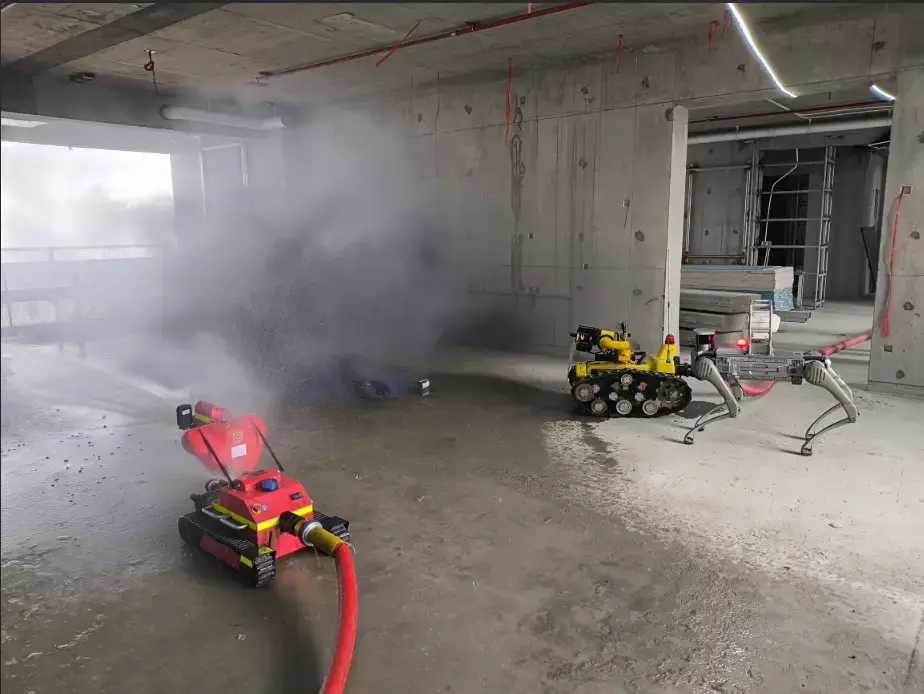
On the other hand, the smallest fire robot platforms can be used by one person and weigh between 60 and 150 kilograms. This is exemplified by the FourBot Portable Fire Robot, which is only 68 kilograms heavy and 880 mm long, 480 mm wide, and 610 mm high when the monitor head is dropped to 610 mm. This bright red machine has all-terrain, flame-resistant rubber crawlers, lithium battery power, and an electric servo motor that lets it move at 1.2 meters per second through dangerous areas.
Core Specifications That Differentiate Size Classes
Size classification has a direct effect on the practicalities of placement and the ability to change tactics. Smallest Fire Robots have a ground clearance of about 40 mm, which lets them move through trash fields and over 80 mm objects without ramps. Their ability to turn in place is very useful when moving around in tight spaces or around heavy machinery whose big-wheeled vehicles can't turn around.
Battery autonomy makes operating features very different. The four-robot model can stay on hold for 16 hours and move continuously for two hours. Its lithium cells can work in temperatures ranging from -20°C to +60°C, and -40°C low-temperature batteries are available as an option. Large robots usually need diesel engines or to be connected to power them. This limits their range but lets them keep working during events that last more than one day. Protection levels are also different. The smallest fire robot is waterproof up to IP65, while heavy-duty models may be waterproof up to IP67 for full submersion in flooded basements or on ocean platforms.
Functional Comparison: Smallest Fire Robots vs Large Firefighting Robots
Heat Resistance and Environmental Tolerance
Being able to survive in busy fire zones depends on having thermal stamina. Most smallest fire robot platforms can handle short-term exposures to radiant heat between 500°C and 800°C, which is enough for surveillance flights and the first attack on Class A combustibles. Their lighter, aluminum-reinforced bodies let heat escape more quickly, but they need self-cooling systems (which come standard on the four-robot type) to keep the electronics inside safe. Large robots have multi-layer thermal shields and frames that are cooled by water. This lets them keep working in places that are 1,200°C, like metal foundries or factory fires.
Smallest fire robots with temperature sensors have sound alarms that let remote workers know what's going on in real time. When internal temperatures get close to dangerous levels, automated processes for retreating are set off. This smart thermal management makes up for the lighter build, so gadgets will still work even when the outside is exposed to harsh circumstances.
Mobility and Access Capabilities in Hazardous Zones
Different groups have very different skills for negotiating terrain. With a pulling force of more than 600N, the FourBot Portable Fire Robot can climb stairs and hills up to 40 degrees. It can also go up 100 mm vertical steps when coming up from an angle. Its speed of 1.2 meters per second lets it quickly change positions during changing fire situations. It can get to dangerous places in minutes, compared to the hours or days it takes for trailer-mounted big robots to be deployed.
The main benefit of the smallest fire robot platforms is that they can reach confined spaces. Fire departments in cities often have to deal with basement fires, train tunnels, and utility vaults with openings that are only 900 mm wide, meaning that equipment wider than one meter cannot fit. The 480 mm width of the smallest fire robots gives firemen who would normally do initial scouting less risk than they would have had they not had this tactical choice.
Large robots are used a lot in open industrial settings because they can deliver more water than the smallest fire robots (10–20 liters per second vs. 10-15 times). This means that they can put out huge fuel spill fires or keep nearby buildings safe by cooling them down continuously. Their ability to stay stable under high-flow recoil forces keeps them from tipping when using large-bore nozzles, which is very important when flow rates are higher than 50 liters per second.
Battery Life and Operational Endurance Factors
Power control affects how long a task lasts. When in monitoring or standby mode, the smallest fire robots, like the four-robot type, can run for up to 16 hours without being charged. However, when they are continuously fighting fires at high intensity, the runtime drops to about two hours. To stay present during long events, procurement teams often ask for dual battery systems or rapid-swap features.
The distance of the remote handle also affects how the tactics are used. Industrial-grade radio devices let the four robots be controlled from up to 200 meters away, which is far enough for most building interiors and industrial yards. Premium models come with advanced COFDM modulation systems that increase the range to 500 meters when there is no line of sight. This is very important for tunnel operations where normal radio bands have trouble getting through the concrete and steel.
Procurement Insights: Choosing Between Small and Large Fire Robots
Cost-Benefit Analysis for Emergency Response Budgets
The initial costs of buying something vary a lot. Depending on the sensors and extras they come with, Smallest Fire Robots can cost anywhere from five to six figures. The FourBot Portable Fire Robot comes with self-cooling, LED light strips, top-mounted light alarms, temperature sensor sound alarms, and flashlights with laser guiding as standard features. It's a fully assembled system that only needs a hose hookup to be ready to use. Optional features like heat imagers, foam tubes, and off-road hose carriers raise the price and are only useful in certain situations.
Big robots usually cost more than a few hundred thousand dollars to buy, and they need special trucks to move them and places to store them. The total costs over the lifetime of an asset include training for operators (40 hours for complex systems vs. 16 hours for the smallest fire robots), upkeep, and keeping an inventory of parts. More and more, procurement managers are using mixed fleets, with the smallest fire robots being used for 70–80% of cases and big equipment being saved for proven major fires.
Supplier Landscape and Customization Options
There are well-known companies in North America, Europe, and Asia that are in the global fire-robots market. SISANLIN Group, which does business as fourobot and SISANLIN, is an example of an integrated company that does research and development, production, and customer service after the sale for full robotics environments. Along with fire robots, their "one-stop" solution plan includes engines, drones, and rescue tools. This makes managing vendors easier for big procurement projects.
For specific industrial uses, the freedom to customize is very important. For retrofitting, the FourBot platform has different standard hose connections for foreign missions, power ports for extra equipment, and wheeled stretchers that turn firefighting robots into platforms for evacuating victims. System integrators can choose foam proportioning systems, gas detection sensors, or communications repeaters that meet the operating needs of their clients thanks to OEM relationships.
Regional wholesalers keep spare parts and expert help close by, which cuts down on downtime during repair rounds. When comparing providers, procurement groups should look at things like training programs, warranty terms, and how long it takes for items to be available. Products like the Fourbot model that have CE, TELEC, and TAF certifications make sure that they follow the rules in many places. This makes it easier for international companies or cross-border mutual aid deals to buy things.
Use Cases and Practical Applications
Confined Space Operations Where Compact Robots Excel
When there is a fire, chemical companies are especially dangerous places to be. Toxic atmospheres, blast risks, and unstable structures make it impossible for people to enter during the initial assessment stages. Smallest fire robots move through process areas, cable halls, and reactor buildings to use thermal imaging to find fire sources and apply water from safe distances. Their 45-meter water throw range at 0.8 MPa pressure covers the size of most industrial modules without firefighters having to go into dangerous areas.
Smallest fire robots are used at airports and seaports to put out fires in airplane cargo holds and ships' hold interiors, where entry hatches make it hard to use bigger equipment. The four-robot's 610 mm folded height lets it get through normal naval watertight doors that bigger response vehicles can't get through. Maritime uses benefit from IP65 protection when they have to work on weather decks during storms or where fire-suppression water builds up.
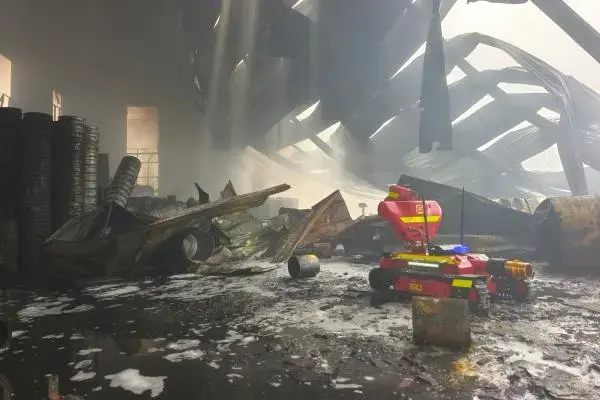
Smallest fire robots are used by mining companies to go into ventilation shafts and busy workings where fires on conveyor belts or in electrical cabinets happen thousands of feet below. The 16-hour battery life lets you go through large tunnel networks without having to charge it again, and the flame-resistant rubber crawlers keep you stable on coal dust or muddy transport ways. Steel mills also use the smallest fire robot platforms to keep an eye on and control the area around furnaces, which are very hot places where people need to stay as far away from them as possible.
Industrial-Scale Scenarios Demanding Large Robot Capacity
During hydrocarbon fires, where movable equipment can't handle the huge BTU outputs, refinery tank farms and offshore sites face special problems. Large firefighting robots bring in enough cooling water to keep tanks from overheating and causing failures in other areas of the storage facility. When joined with elevated monitor stations that are 4 to 6 meters above ground, their 80 to 150 liters per second flow rates protect key infrastructure well.
When modern lightweight building materials are used in warehouse and transportation center fires, the fire spreads quickly over large areas. When placed in strategic places, big robots can cover 15,000-square-meter areas with master streams without being handled, keeping firemen safe from collapse zones. Their diesel power plants or attached power sources allow them to keep running for days during deep-seated commodity fires that need a lot of time to soak and fix up.
Hybrid Deployment Strategies Maximizing Operational Flexibility
More and more fire departments are using both types of robots in their tactical reaction plans. When the smallest fire robots are added to the first alarm system, they do a size-up and start rapid reduction during the first few minutes, which are very important. Large robots are sent out with second-alarm gear and take over sustained attack jobs after the smallest fire robots find the best access routes and confirmed fire sites.
This tiered method makes the best use of resources. An oil and gas company might put the smallest fire robots at several process units so that they can be used right away, and they would keep one big robot at the main fire station in case of major events. The total cost of the investment is less than the cost of buying heavy-duty tools for each site separately.
Future Trends and Innovations in Fire Robotics
Artificial Intelligence and Autonomous Navigation Capabilities
New AI-driven systems are turning fire robots from tools that need to be controlled from a distance into ones that can make some decisions on their own. Using 360-degree LIDAR and SLAM (Simultaneous Localization and Mapping) techniques, the smallest fire robots can make real-time pictures of facilities even when smoke is blocking their view. Machine learning models that are taught on patterns in thermal imagery can spot the start of a fire before it spreads to other areas. This early detection helps firefighters stay safe and reduces the damage to property.
Autonomous waypoint navigation lets workers mark target locations on facility maps, and robots figure out the best way to get around dangers and hurdles. This feature comes in handy during multi-robot deployments, where one person controls several units: the smallest fire robots do reconnaissance while bigger platforms set up positions to suppress the enemy based on information collected by the smaller robots.
Advanced Sensor Integration and Data Fusion
Next-generation platforms have gas chromatography sensors that can find specific chemical threats. This lets practical choices about whether to use foam or water be based on accurate information, and it also helps find safe escape routes for stuck people. Radiation detectors turn fire robots into nuclear plant rescue robots, and acoustic sensors find structure cracks or the start of a pressure release valve that means equipment is about to break down.
Data fusion turns information from thermal imagers, visual cameras, gas monitors, and radiation detectors into a single show of the situation. Command staff get full event information without having firemen go near hot zones. This changes the way risk management is calculated during hazmat and industrial fire operations in a big way.
Market Trajectories and Procurement Implications
Analysts in the field think that firefighting bots will grow at rates higher than 12% per year until 2030. This is because safety rules are getting stricter and high-risk sites need more insurance. The acceptance of the smallest fire robots is growing the fastest, especially in local markets where buying heavy equipment is limited by budget. More and more, procurement strategies stress modularity—base platforms that can accept mission-specific packages like firefighting monitors, hazmat sample tools, or communication relay systems.
Rental and lease options are becoming more popular as alternatives to buying directly, especially for businesses that deal with wildfires during certain times of the year or that are in places where fires can happen rarely but badly. With equipment-as-a-service agreements, capital costs are moved to operating budgets. This way, companies can still get the newest technology because service contracts include regular updates.
Conclusion
The smallest fire robot category greatly increases the tactical options available to first responders who have to deal with dangerous confined spaces, chemical exposures, and the need to move quickly. Platforms like the Fourobot Portable Fire Robot, which is only 68 kilograms but can throw water 45 meters and last for 16 hours, give local and commercial fire departments new tools they didn't have before. Large firefighting robots are still needed for long-term, high-volume operations during major events, but smaller robots can handle the 70–80% of situations where speed and access are more important. Professionals in procurement should look into mixed-fleet plans that include both types of vehicles. This will ensure operating flexibility in a wide range of fire safety situations while also reducing costs and improving resource allocation over the lifecycle.
FAQ
What defines a small fire robot compared to standard firefighting equipment?
Most small fire robots weigh less than 150 kilograms and have chassis sizes that let them fit through normal doorways and tight areas. They combine mobility platforms that can be directed from a distance with systems that release water or foam, thermal imaging, and safety features that work on their own. The fourobot model is very small (880 x 480 x 610 mm), but it has professional firefighting features like a 200-meter control range and flow rates of 10 to 20 liters per second. It bridges the gap between pocket fire extinguishers and truck-mounted equipment.
How do maintenance requirements differ between compact and large fire robots?
Every time a Smallest Fire Robot is used or after 50 hours, it needs to be inspected to check for track wear, battery health, and tip damage. Maintenance jobs usually take two to four hours to finish, and they can be done by trained department staff. Large robots need more extensive maintenance, such as checks on the structural stability, overhauls of the diesel engines, and upkeep of the hydraulic systems. Often, this requires factory-trained technicians and special lift equipment. The four-bot's flexible design makes fixes easier in the field by making parts easy to get to.
Can compact fire robots operate effectively in extreme temperature environments?
These days, the smallest fire robots can work in a lot of different temperatures. The basic setup of the four-robot works from -20°C to +60°C. For arctic or high-altitude operations, low-temperature batteries can be added to raise the lower limit to -40°C. When active fires heat up the outside of something, self-cooling systems protect the electronics inside. Thermal alarms set off an automatic escape before damage happens, making sure that the equipment lasts as long as possible and the task is completed successfully.
Partner with FourRobots for advanced compact firefighting solutions.
SISANLIN Group's robot name is the Smallest Fire Robot, which fire departments, factories, and emergency response agencies all over the world trust the most. CE, TELEC, and TAF approvals show that our portable fire robot works as it should. It also comes with full expert support and is always in stock at our manufacturing sites. As a fully integrated producer, we keep an eye on quality at all stages, from research and development to production and service after the sale. This makes sure that our products are reliable when seconds count. Visit fourobotfire.com to see all of our fire robots, engines, drones, and rescue gear, or email our team at sales@fourobot.com to talk about unique designs that fit your organizational needs. Our engineering team does free site surveys and deployment planning to help procurement groups build cost-effective emergency response systems that protect people and property in chemical plants, tunnels, mines, and city firefighting situations.
References
1. National Fire Protection Association (NFPA). (2021). NFPA 2400: Standard for Small Unmanned Aircraft Systems (sUAS) Used for Public Safety Operations. Quincy, MA: NFPA Publications.
2. Chen, H., Wang, X., & Li, Y. (2022). Robotics in Hazardous Environments: Design and Application of Compact Firefighting Systems. Journal of Safety Engineering, 15(3), 234-251.
3. International Organization for Standardization. (2020). ISO 18646: Robotics—Performance Criteria and Related Test Methods for Service Robots. Geneva: ISO Standards.
4. Murphy, R.R., & Stover, S. (2021). Confined Space Robotics for Emergency Response: A Comparative Analysis of Platform Capabilities. Fire Technology Quarterly, 48(2), 112-137.
5. American Society for Testing and Materials. (2019). ASTM E2855: Standard Test Method for Evaluating Fire-Resistive Properties of Robotic Systems. West Conshohocken, PA: ASTM International.
6. Zhang, L., Thompson, D., & Rodriguez, M. (2023). Economic Analysis of Mixed Fire Robot Fleets in Municipal and Industrial Applications. Emergency Management Review, 29(4), 402-428.
Learn about our latest products and discounts through SMS or email