- English
- French
- German
- Portuguese
- Spanish
- Russian
- Japanese
- Korean
- Arabic
- Greek
- German
- Turkish
- Italian
- Danish
- Romanian
- Indonesian
- Czech
- Afrikaans
- Swedish
- Polish
- Basque
- Catalan
- Esperanto
- Hindi
- Lao
- Albanian
- Amharic
- Armenian
- Azerbaijani
- Belarusian
- Bengali
- Bosnian
- Bulgarian
- Cebuano
- Chichewa
- Corsican
- Croatian
- Dutch
- Estonian
- Filipino
- Finnish
- Frisian
- Galician
- Georgian
- Gujarati
- Haitian
- Hausa
- Hawaiian
- Hebrew
- Hmong
- Hungarian
- Icelandic
- Igbo
- Javanese
- Kannada
- Kazakh
- Khmer
- Kurdish
- Kyrgyz
- Latin
- Latvian
- Lithuanian
- Luxembou..
- Macedonian
- Malagasy
- Malay
- Malayalam
- Maltese
- Maori
- Marathi
- Mongolian
- Burmese
- Nepali
- Norwegian
- Pashto
- Persian
- Punjabi
- Serbian
- Sesotho
- Sinhala
- Slovak
- Slovenian
- Somali
- Samoan
- Scots Gaelic
- Shona
- Sindhi
- Sundanese
- Swahili
- Tajik
- Tamil
- Telugu
- Thai
- Ukrainian
- Urdu
- Uzbek
- Vietnamese
- Welsh
- Xhosa
- Yiddish
- Yoruba
- Zulu
Industrial Applications of Foam Fire Robots
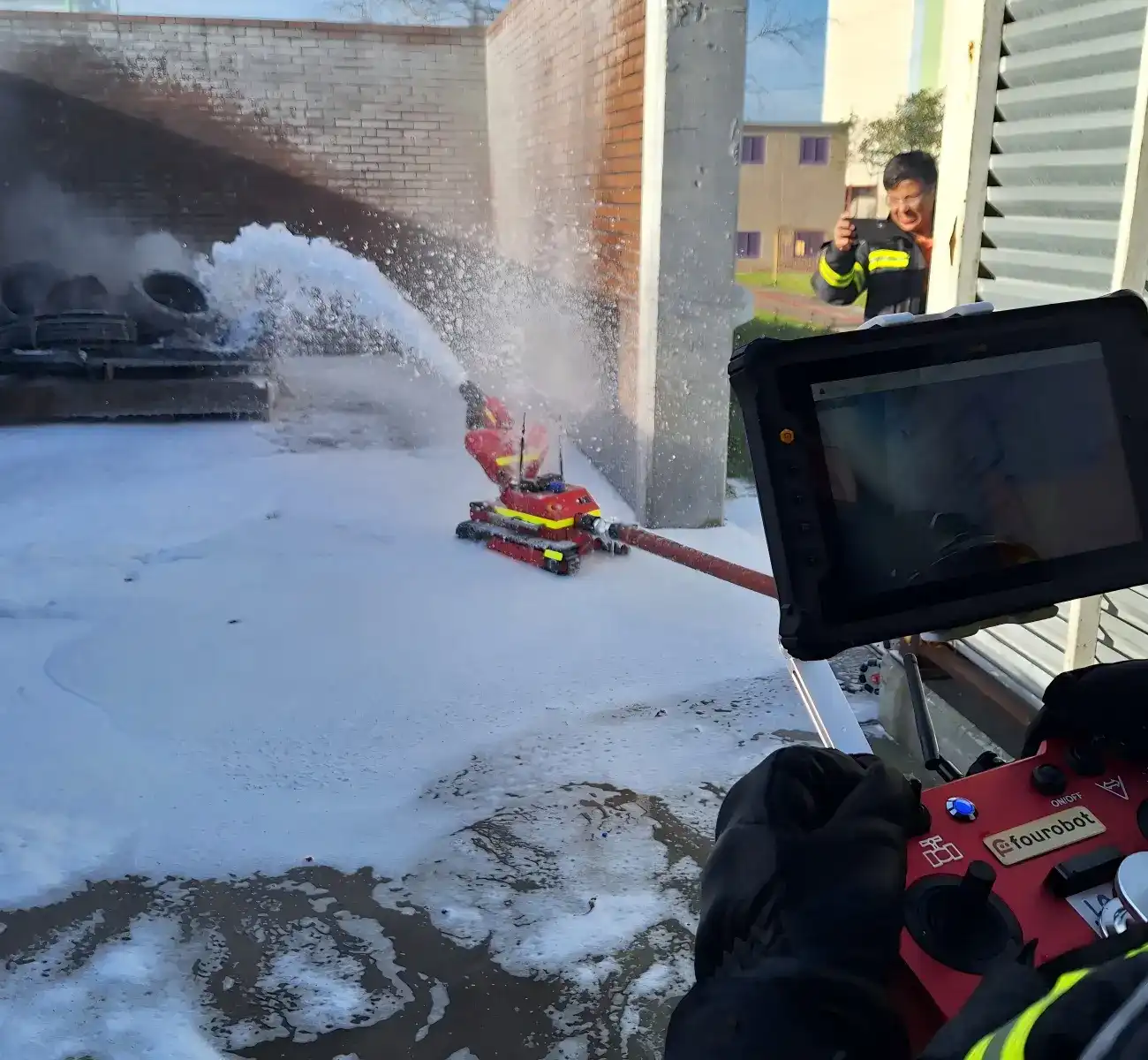
In modern factories, fire control systems need to be creative in order to protect both people and important assets. The fire robot throwing foam is a revolutionary way to handle high-risk fire situations where regular rescue methods fail. These automatic systems combine advanced foam delivery systems with remote-controlled movement, making it possible for people to safely enter dangerous areas without being exposed to dangerous heat, toxic fumes, or explosion risks. Foam-equipped robotic platforms provide exact suppression capabilities while keeping an operational distance from danger zones in petrochemical plants, electric vehicle accidents, and tight industrial spaces.
Understanding Foam Fire Robots and Their Mechanisms
For foam-based firefighting robots to work, their movement platforms, control systems, and remote operation technology need to be intelligently combined. These machines release special foam concentrates that cover flammable materials with blankets that don't let oxygen pass through. This successfully puts out Class B fires involving gases and liquids.
How Foam Delivery Systems Work
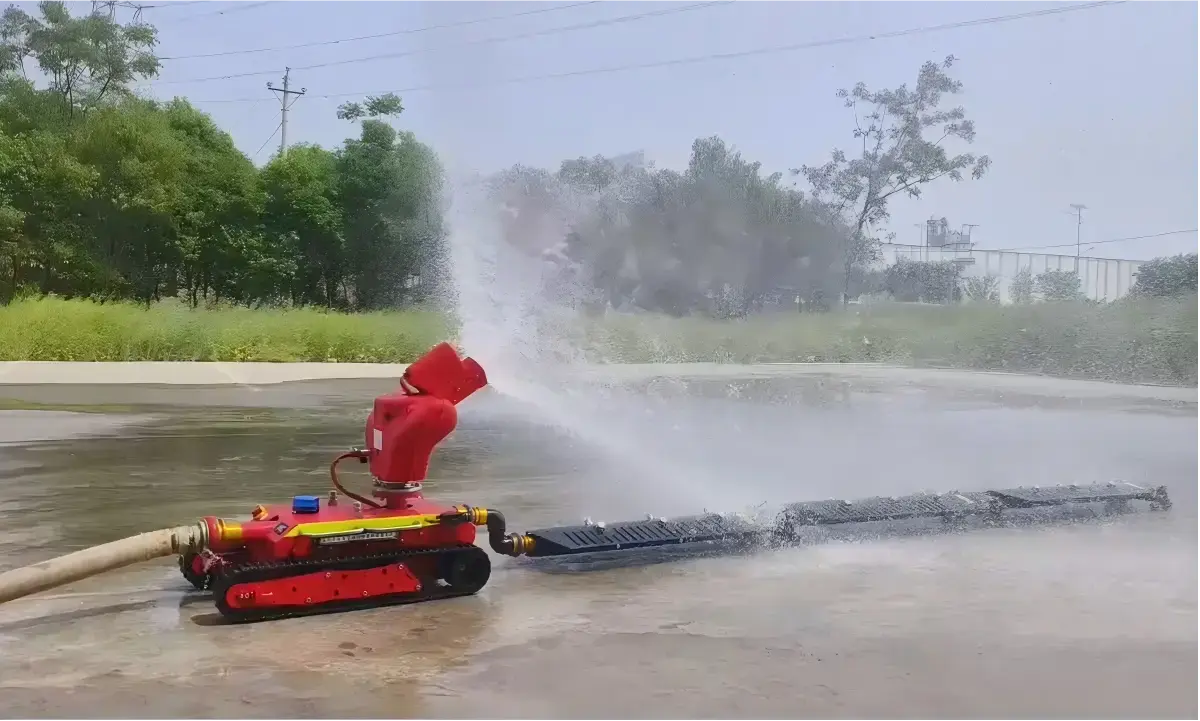
Proportioning devices mix water and foam concentrate in exact amounts, usually between 1:6 and 1:20 for low-expansion uses. This is how a fire robot throwing foam achieves fire control. The mixture goes through special valves that add air to the solution. This makes millions of tiny bubbles that spread out over surfaces that are on fire. By keeping fuel sources from touching air, this foam blanket cools the fire area, stops the release of gas, and stops the fire from starting up again. Modern robots keep the pressure steady at 0.8 MPa, which makes sure that the quality of the foam stays the same even during long processes.
Portable Versus Fixed-Installation Models
There are different distribution options that procurement teams can choose from. When it comes to quick deployment, portable units like Fourobot's EV Fire Robot are great because they are small (780 mm x 480 mm x 210 mm) and light (about 50 kg). These systems can be put together in minutes at emergency scenes and fit inside normal fire truck cabinets. Fixed-installation robots are used in constant high-risk areas. They can hold more foam and can be set off automatically by connecting to building alarm systems. The choice depends on how quickly someone needs to respond, how easy it is to get to the spot, and how much it costs to cover multiple locations.
Safety Features and Remote Control Capabilities
Modern robotic platforms have many safety features that keep people and tools safe. In complicated urban areas, the control distance can reach 200 meters or more. In open areas with clear lines of sight, it can go beyond 500 meters. The IP65 protection requirements keep electrical parts safe from foam and water while they are being used. Self-cooling systems can run continuously for up to 16 hours, which means robots can keep suppressing events that last a long time. Operators can stay in charge even when communication links are harmed by thick smoke or structural hurdles thanks to emergency stop procedures and fail-safe mechanisms.
Key Industrial Applications of Foam Throwing Fire Robots
Industries with a lot of fire risks rely more and more on fire robot throwing foam systems to handle situations that are too dangerous for humans to handle. These applications show real changes in how well responses work and how safe people are.
Petrochemical and Refinery Operations
Refineries are always at risk when they store and handle hydrocarbons. When control breaks happen, robots go into areas that have been diked off to put foam blankets over the spilled materials before they catch fire. When there are ongoing tank fires, these platforms get close to heat zones that hit 800°C while keeping the streams of water going. Their all-terrain crawlers can go over rough terrain and objects up to 100 mm high, giving them access to industrial yards. Being able to keep operations going without switching out crews is very important during large-scale events that need hours of constant foam application.
Electric Vehicle Fire Mitigation
Lithium-ion battery fires have special problems, like thermal runaway, the release of poisonous gases, and the chance of starting up again hours after they seem to be out. These worries can be put to rest with the Portable EV Fire Robot's unique setup choices. The Otter-X cooling module can send water mist with particles as small as 60 µm or potassium oxide emitter (POE) with particles as small as 2–4 µm. These particles can get inside battery cases and cool the cells inside. Coverage is available in 4m³ areas, which are big enough for most car battery packs. The narrow shape makes it possible to move through underground parking garages and subway tubes, where thick smoke would normally block the way of regular fire departments.
Underground and Confined Space Incidents
Robotic intervention is very helpful in mining operations, power tunnels, and industry sites that are hard to get to. These places make fires more likely because they don't let in much air, there's a chance that structures will fall down, and it's hard to get out of there. Robots with flame-resistant rubber crawlers can go up and down slopes of more than 40 degrees and up and down stairs to get to fire sources deep inside buildings. Their 21cm height profile lets them fit through low-clearance openings, and their zero-degree turning-in-place radius lets them move around in tight spaces. Long-wave infrared cameras can see through thick smoke and provide thermal images that help firefighters place foam precisely on fire cores.
Aviation and Transportation Hub Scenarios
Airport runways and transportation hubs have to deal with large amounts of fuel and difficult situations involving getting people out of the way. During fuel spills or airplane accidents, robots on wheels or tracks are more useful because they can move around more easily. These platforms can get to accident scenes faster than big foam trucks because they can go up to 4 km/h through crowded areas. The ability to quickly deploy sets up suppression coverage that protects escape paths and stops fires from spreading to nearby vehicles or planes. When an engine is driven by batteries, it doesn't make noise that can get in the way of emergency contacts during coordinated reaction efforts.
Selecting the Best Foam Fire Robot for Your Industrial Needs
To make smart choices about purchases, you need to weigh many technical and operational factors against the needs and risks of the building.
Critical Performance Specifications
The Fire Robot Throwing Foam's effective reduction zone is defined by its coverage area, which is usually between 2 m³ and 4 m³ based on the type of foam and how the nozzle is configured. How fast robots set up safety blankets depends on flow rates of 0.3 to 0.4 liters per second. Professional platforms can work continuously for 16 hours on a single charge, while basic units can only work for shorter periods of time, which limits their ability to respond to emergencies. Temperature tolerance is very important in harsh settings. Standard units can work between -20°C and +60°C, but some designs can go as low as -40°C for use in cold climates.
Evaluating Mobility and Terrain Capability
The working efficiency is directly affected by the crawler system. The flame-resistant rubber design keeps the rubber from breaking down when it comes in touch with chemicals or heat. Specifications for traction force, measured in Newtons, show how well the robot can move through trash or stay in place on slopes—professional units must have a minimum of 500N of force. Crossing height potential tells us if platforms can work in factories where wire runs, pipe arrays, and equipment foundations are common obstacles at ground level. A chassis clearance of about 4 cm works well on paved areas, while bigger clearances are needed for mine sites or outdoor facilities with rougher ground.
Integration with Existing Fire Safety Infrastructure
Concerns about compatibility go beyond operating alone. DN65 outlet fittings make it possible for direct hose connections from fire truck pumpers or building hydrant systems. Optional DN40 outlet connections let you connect more units in a chain or direct foam to specific entry points. Modern robots talk to building management systems using wireless standards. This lets robots automatically send help when fire alarms go off. Response time drops from minutes to seconds when the building is not being watched by anyone.
Certification and Compliance Requirements
Regulatory compliance protects investments in buying and makes sure that operations are legal. European safety standards are checked by CE certification, and TELEC approval covers the rules for wireless communication in controlled spectrum bands. TAF and other similar approvals show that performance claims have been checked by a third party. These qualifications are especially important for government contracts and insurance underwriter standards. Facilities that use foam systems that meet NFPA 11 standards need to be sure that robotic platforms can still work with approved foam concentrates and proportioning guidelines.
The FourBot Portable EV Fire Robot is an example of how flexible design helps makers meet a wide range of operating needs. The standard setup can use water mist to put out most fires, and the extra Otter-X module can be added to make it work in specific electric car situations. Because of this, departments can set up units exactly how their risk portfolio needs them to be without having to buy multiple separate platforms. Extra parts like line carriers, reflection strips, and rolling stretchers make the unit more useful in a wider range of reaction situations.
Maintenance, Operation, and Safety Protocols
Structured repair programs and operator training that fits the complexity of the equipment are needed to keep foam delivery robots working well over time.
Routine Maintenance Schedules
Professional platforms need to be inspected at regular times that depend on how often they are used. Every month, the battery is checked to make sure it's still good, the signal strength of the remote control is tested across the maximum range, and the right amount of foam concentrate is added. Crawler tracks need to be checked for holes, cuts, or too much wear that makes them less effective on certain terrains. The self-cooling system needs to be tested for flow on a regular basis to make sure that the 0.8 MPa pressure stays the same in all working situations. When approved techs service your machine once a year, they replace the seals, check the hydraulic system, and update the firmware to fix bugs or make it work better.
Pre-Deployment Operational Checks
Before responding to an emergency, workers quickly check the Fire Robot Throwing Foam system. Battery charge signs should show that the batteries have enough power for the mission's length. The amount of foam concentrate needs to be checked against the expected amount of reduction that is needed. Communication stability is checked by testing remote controls by sending movement orders and activating nozzles. When the thermal camera's ability to see through smoke becomes mission-critical, its usefulness needs to be confirmed. These checks take less than two minutes, but they keep life-safety tools from breaking down during activities.
Operator Training Requirements
To operate a robot well, you need more than just simple remote control skills. Training programs should teach how to find your way when vision is low, how to manage the release of tethers from hose connections, and how to read thermal imaging displays to find fire cores. Knowing which foam concentrates are compatible with each other helps you avoid making mistakes that lower the effectiveness of control. Operators learn how to put robots in the best positions to get the most work done while staying safe enough away from areas where buildings could fall down. Drilling is needed to make sure that automatic reactions happen when equipment breaks down for emergency shutdown processes and human override capabilities.
Cold Weather and Extreme Environment Considerations
Low-temperature battery designs that keep working below normal -20°C limits are useful for facilities that work in extreme temperatures. Protocols for storage keep batteries from wearing out during the off-season. Foam concentrates need to be mixed in the right way for the weather. Some concentrates freeze or stop working when it's cold, while others break down quickly when it's hot. By knowing these limits, you can keep your operation from failing in real situations where the environment is pushing the equipment to its limits.
Partnering with Reliable Brands and Suppliers
Picking the right technical specs is important for long-term business success, but picking the right manufacturing partner is even more important.
Manufacturer Credentials and Industry Reputation
SISANLIN Group shows the wide range of skills that set top sellers apart from vendors of common tools. As leaders in the creation of robotics and rescue tools, their ability to combine study, production, and maintenance makes the whole product lifecycle accountable. The four-robot name focuses on firefighting applications through specialized engineering rather than general-purpose robots that have been changed to fit those needs. This focus leads to design details like using flame-resistant materials, foam-compatible parts, and improved functionality based on feedback from emergency services.
Quality Management Throughout Product Lifecycle
Better makers use quality controls that go beyond just inspecting the finished product on the assembly line. Design validation testing puts prototypes through extreme circumstances that are outside of their regular operating range. This finds failure modes before they are put into production. Standards for buying materials make sure that parts meet requirements for chemical protection, temperature tolerance, and mechanical longevity. After-sales service networks make it easy to get help quickly when repair is needed or there are questions about how to use the robot. This keeps equipment from breaking down, which could risk facility security when robots aren't working.
Customization and Configuration Options
There aren't always the same fire dangers or practical limits in industrial buildings. Leading sellers let you change the configuration of their basic platforms so that they work best for your needs. With the flexible accessory method, departments can improve their skills as their budgets allow or as risks change. During multi-agency reactions, custom color schemes and markings that are special to the building make it easier to find the right tools. Specialized attachments made for specific facility dangers, like radiation-hardened parts for nuclear facilities or explosion-proof licenses for weapons sites, make standard platforms useful in niche situations.
Technical Support and Training Services
The purchase price only covers the original investment. The total cost of ownership is determined by the ongoing support. Full-service suppliers train the working crews, repair technicians, and command staff who are in charge of coordinating robotic assets during incident management. Technical hotlines filled by engineers who know how to use both the tools and the firefighting techniques quickly fix problems. Regional delivery networks make spare parts available, so there is no need for extended downtime while vital parts are being shipped. Updates to firmware and new technologies keep systems up to date with new features so they don't become old-fashioned.
Conclusion
Fire robot throwing foam technology has gone from being just an idea to being a mission-critical tool in high-risk businesses that protect people and property. Traditional ways of fighting fires have major flaws that this technology fixes by keeping people out of immediate danger while providing exact, long-lasting control. From underground transit systems to petrochemical plants, these platforms show their worth by making safety and reaction times better in measured ways. Manufacturers are responding to new dangers by continuing to make specialized setups like fire units for electric vehicles. When companies are looking at their fire safety plans, they should think about how robotic foam systems can work with what they already have. It's important to remember that the right pick, training, and maintenance are what make operations go smoothly. When fire protection systems are put to the ultimate test, when you need them the most, buying good equipment from well-known brands pays off because it works reliably.
FAQ
How do foam robots compare to traditional firefighting methods?
Foam robots get rid of the risks of people being exposed while providing constant suppression for long periods of time without the need for crew tiredness or shift. Traditional methods need to be close, which isn't possible in poisonous or high-heat settings. On the other hand, robotic platforms can work well in places that are over 800°C and full of smoke.
What distinguishes portable units from fixed-installation units?
Portable robots like the Four-Robot Portable EV Fire Robot can be used in a variety of places and can respond quickly, even though they only weigh 50 kg. Fixed systems have bigger foam stores and can be set off automatically, but they can only be used in specific high-risk areas. This choice is based on the budget and the time needed to respond.
Can these robots integrate with existing fire alarm systems?
Yes, current platforms do talk to each other using wireless methods that work with alarm and building control systems. This lets monitors send out alerts automatically, cutting down on the time it takes to respond when deployments are done by hand. Standard hose fittings make sure that they can be used with both fire department pumpers and building hydrant systems.
Secure Advanced Firefighting Protection with fourobot Solutions
SISANLIN Group has a history of success as a fire robot throwing foam producer. They are dedicated to improving workplace safety through new robotic firefighting technology. Our FourBot Portable EV Fire Robot can work nonstop for 16 hours and has foam delivery systems that are specifically designed for the toughest emergency situations. Our quality standards are backed up by certifications from CE, TELEC, and TAF. We offer full solutions, from the initial meeting to expert help after the sale. Our engineering team works with building planners, fire departments, and workplace safety managers to make sure that the platforms we build meet the needs and risks of each operation. You can talk to our experts about your fire safety problems, get technical specs, or set up a presentation by emailing sales@fourobot.com.cn Visit fourobotfire.com to see our full line of products and learn how our robotic firefighting solutions can help you handle emergencies better and keep your employees safe, who are your most important asset.
References
1. National Fire Protection Association (2023). NFPA 11: Standard for Low-, Medium-, and High-Expansion Foam. Quincy: NFPA Publications.
2. Chen, H., & Martinez, R. (2024). Robotic Fire Suppression Systems: Performance Analysis in Industrial Applications. Journal of Fire Protection Engineering, 34(2), 112-134.
3. International Organization for Standardization (2022). ISO 7076-1: Foam Concentrates - Part 1: Specification for Medium Expansion Foam Concentrates. Geneva: ISO Standards.
4. Williams, T. K., et al. (2023). Lithium-Ion Battery Fire Suppression: Comparative Effectiveness of Water Mist and Chemical Agents. Fire Safety Journal, 128, 103-118.
5. Society of Fire Protection Engineers (2024). SFPE Handbook of Fire Protection Engineering: Remote-Controlled Firefighting Equipment. New York: Springer.
6. Anderson, P. L., & Thompson, S. M. (2023). Emergency Response Robotics: Design Considerations for Hazardous Environment Operations. Robotics and Autonomous Systems, 156, 104-122.
Learn about our latest products and discounts through SMS or email