- English
- French
- German
- Portuguese
- Spanish
- Russian
- Japanese
- Korean
- Arabic
- Greek
- German
- Turkish
- Italian
- Danish
- Romanian
- Indonesian
- Czech
- Afrikaans
- Swedish
- Polish
- Basque
- Catalan
- Esperanto
- Hindi
- Lao
- Albanian
- Amharic
- Armenian
- Azerbaijani
- Belarusian
- Bengali
- Bosnian
- Bulgarian
- Cebuano
- Chichewa
- Corsican
- Croatian
- Dutch
- Estonian
- Filipino
- Finnish
- Frisian
- Galician
- Georgian
- Gujarati
- Haitian
- Hausa
- Hawaiian
- Hebrew
- Hmong
- Hungarian
- Icelandic
- Igbo
- Javanese
- Kannada
- Kazakh
- Khmer
- Kurdish
- Kyrgyz
- Latin
- Latvian
- Lithuanian
- Luxembou..
- Macedonian
- Malagasy
- Malay
- Malayalam
- Maltese
- Maori
- Marathi
- Mongolian
- Burmese
- Nepali
- Norwegian
- Pashto
- Persian
- Punjabi
- Serbian
- Sesotho
- Sinhala
- Slovak
- Slovenian
- Somali
- Samoan
- Scots Gaelic
- Shona
- Sindhi
- Sundanese
- Swahili
- Tajik
- Tamil
- Telugu
- Thai
- Ukrainian
- Urdu
- Uzbek
- Vietnamese
- Welsh
- Xhosa
- Yiddish
- Yoruba
- Zulu
Can small fire robots replace human firefighters?
The smallest fire robot can't fully replace firemen, but it changes the way rescue teams handle dangerous situations in a big way. These small, remotely controlled machines are not replacements for people; they are meant to add to the force. This means that departments can send robots into places where people would likely get hurt or killed. By using a small fire robot for initial reconnaissance or in areas with high heat, fire departments can keep their human resources while getting important information and putting out fires in places that were thought to be impossible before. The real question isn't about replacing, but how can departments use these movable tools to make operations safer and more effective for firefighters?
Understanding the Smallest Fire Robots: Features and Capabilities
What Makes a Fire Robot "Small"?
Size does matter sometimes when procurement officials look at small firefighter robots. A portable fire robot is usually less than 90 cm long and weighs around 68 kg, which is light enough for two firefighters to quickly deploy from a normal response car. The FourBot Portable Fire Robot is a good example of this type of robot. Its measurements are 880mm x 480mm x 610mm, and its monitor head can be folded down to 610mm for easy travel. This small structure lets you get through doors, tight hallways, and industrial passageways that bigger robots can't get through.
Core Technical Specifications That Define Smallest Fire Robot Performance
The skills of small firefighting robots depend on a number of measured factors that have a direct effect on how well they work in the field. Working with city fire departments and workplace reaction teams has taught us which details really matter for the smallest fire robot in critical situations.
Mobility and Terrain Adaptability
All-terrain rubber crawlers that are resistant to fire are the basis for successful deployment. The four-robot unit can go up slopes of up to 40 degrees and over 100 mm high objects by using approach angles. This lets it move through industrial infrastructure and garbage fields. It can move at up to 1.2 meters per second and can turn while it's still in place, which lets users move quickly in changing fire conditions.
Power and Endurance
Lithium battery systems can work continuously for up to 16 hours without any load, and they can also be used for busy trips for 2 hours. This longer runtime solves a common problem that happens when battery-powered equipment stops working in the middle of an action during long-lasting events. The IP65 grade for waterproofing makes sure that gadgets stay safe during suppression actions.
Suppression Capability
The built-in water monitor sends streams 45 meters at a working pressure of 0.8 MPa, providing 600 to 1200 liters per minute through focused jet, spread spray, and auto-sway patterns, among others. The monitor can turn 60 degrees horizontally and 70 degrees vertically, so you don't have to move the frame to see everything.
Advanced Sensor Integration and Remote Operation
Smart, small robots of today have sensor systems that let humans see into dangerous areas. Temperature sensors with audible alarms, LED light strips for low-light travel, and laser guiding systems on the monitor are all standard features. As an optional update, thermal imaging will be available, letting operators see heat signatures through smoke and building walls. This is a feature that chemical plant operators and limited-space escape teams really value.
Remote control systems use special transmission methods made for situations where there is no line of sight to keep signals intact over lengths of more than 200 meters. Real-time telemetry from control interfaces includes battery state, temperature readings, and water flow rates. This gives workers the same situational knowledge as if they were physically present, but without the risks.
Comparing the Smallest Fire Robot with Traditional Firefighting Methods
Limitations of Conventional Response Approaches
Human entry teams with hand lines and movable monitors are what traditional firefighting relies on. This method works well until the conditions inside the building become too dangerous for people to handle. In flashover situations, safety gear can only be worn for a few minutes at a time because of the heat. Toxic environments in chemical accidents need supplied-air systems that make it hard to move around and work for long periods of time. Buildings that have fallen down are unsafe for entry teams doing scouting because the structures aren't stable.
These limitations are not caused by a lack of training or tools; they are natural limits of biology. Human rescuers need environments that are safe to breathe in, have comfortable temperatures, and are stable on their feet. When events happen outside of these limits, normal strategies stop working while command teams weigh the risks against the possible benefits.
How Compact Robots Change the Tactical Equation
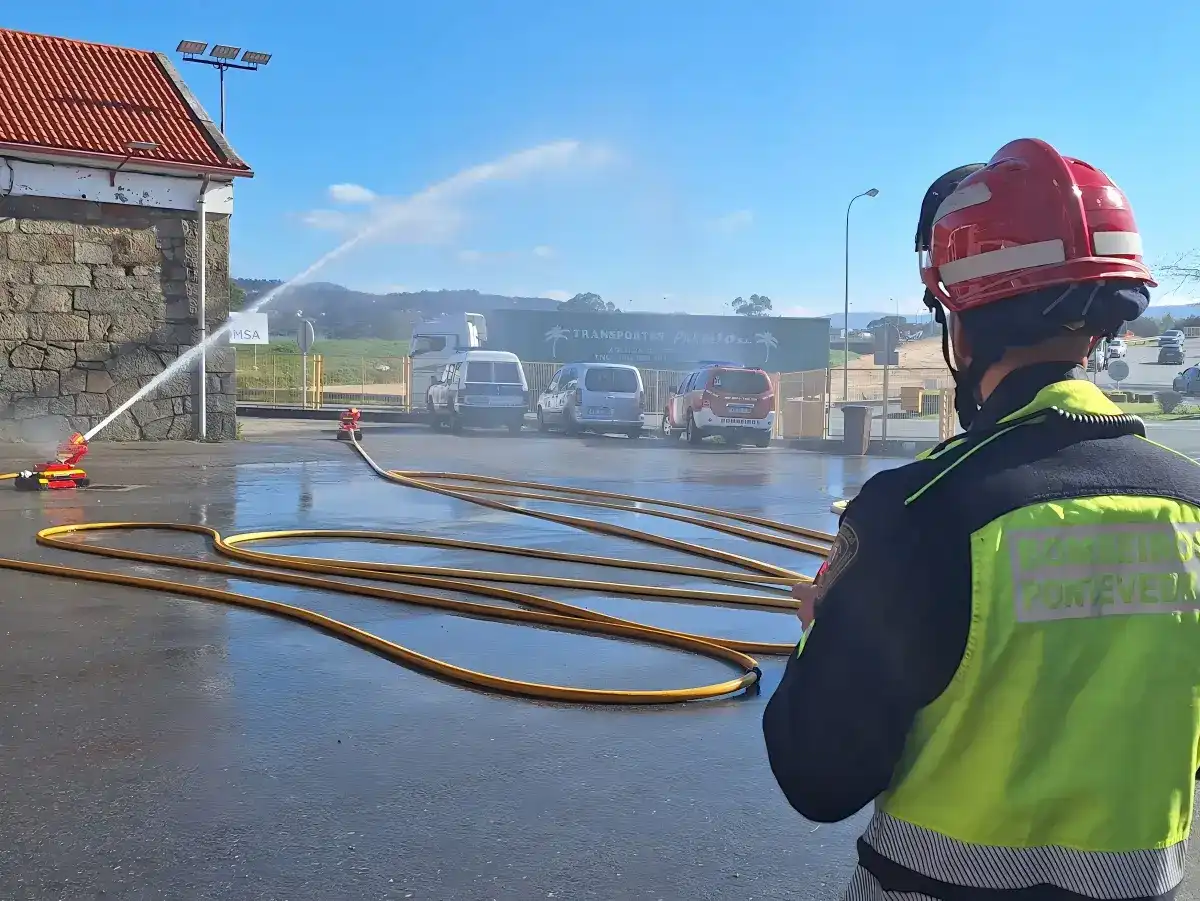
The smallest fire robot gets rid of biological limitations in the first stages of responding to a fire. As usual, the machine works well in temperatures from -20°C to +60°C. For cold climate applications, the lower range can be extended to -40°C with optional setups. Heat shields protect devices from direct flame contact, allowing them to keep working in places where humans would be rendered useless in seconds.
When accidents happen in small spaces, the edge in dimensions is crucial. When wearing full safety gear, a normal firefighter needs about 750 mm of wide clearance and can't get through areas with ceiling heights less than 1200 mm. The four-robot unit can get into places that are 480 mm wide and 610 mm high. It can reach fire seats in cable tunnels, industrial piping halls, and storage areas that people still can't get into.
When a robot is driven by batteries, there are no worries about exhaust in small areas. This is a big plus compared to robots that use gasoline or fuel, which can cause carbon monoxide and oxygen depletion problems. Unlike combustion engines, which need hearing protection, the electric servo motor system is quiet enough that conversation can continue while it is being used.
Performance Benchmarks: 2026 Market Analysis
When procurement teams look at small rescue robots, they should know how the latest models rate in key areas. Recent deployments by fire departments in North America give us useful information about performance that goes beyond what the maker says.
The battery life under load conditions is usually between 2 and 4 hours, but it depends on how much the monitor is used. The four-bot's 16-hour backup capacity lets it stay on duty longer in situations where it needs to be used intermittently. At rated pressure, the throwing distance always stays between 40 and 45 meters, which is far enough to cover a big area in an industrial setting while still keeping safe distances from hazmat events.
The speed of launching is greatly affected by weight issues. Response times are cut by 3–5 minutes for units under 70 kg, which can be set up by two people without any mechanical help. This is in contrast to bigger platforms that need loading tools. For fast deployment situations, the 68 kg four-bot version is the best mix of power and portability.
Practical Applications and Industry Use Cases of Small Fire Robots
Confined Space Fire Control in Industrial Settings
Traditional firefighting doesn't work in many of the small areas that are found in chemical plants, distilleries, and factories. Robotic intervention is useful in cable tubes that run under industrial buildings, equipment vaults that house electrical infrastructure, and storage tanks with ports that only certain people can use.
A petroleum plant in the Midwest reported a fire in a storage area where the ceiling height made it impossible to use a hand line. The small robot got into the space through a 600mm hatch, put out a Class B fuel fire with foam, and gave thermal image data that showed hidden hot spots behind equipment, all without putting people at risk of being exposed to toxic combustion products. The incident leader said that the robot cut down on property damage by about 40% compared to what was expected to happen because of delayed control.
Hazardous Materials Incident Response
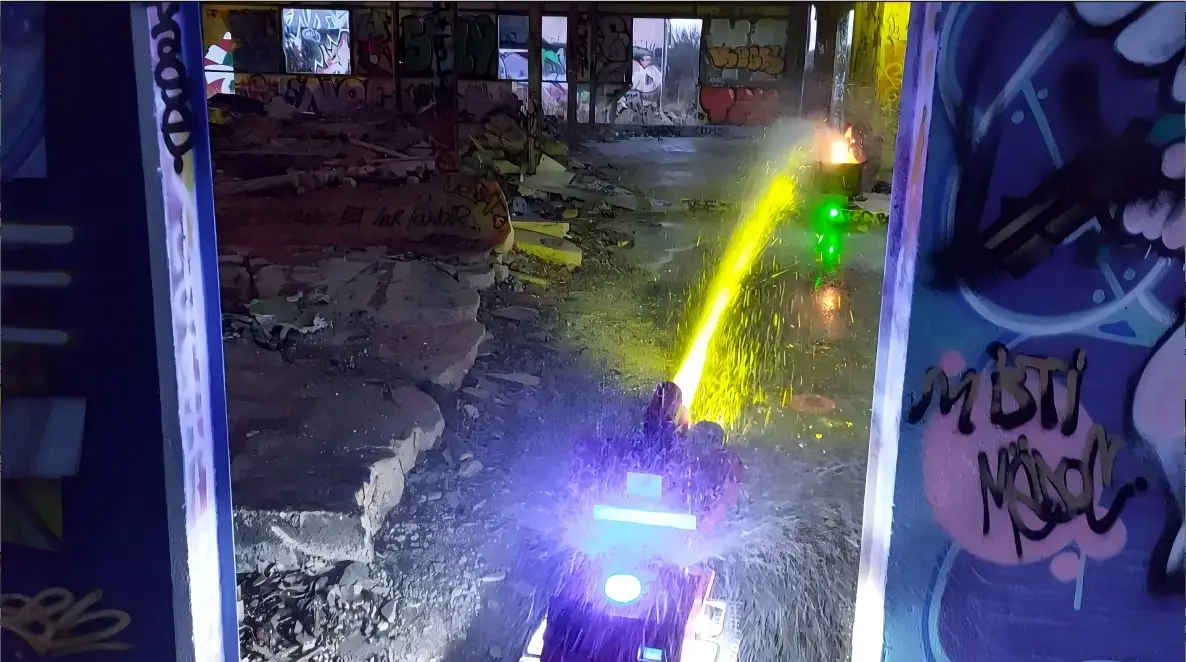
When there are poisonous materials, flammable liquids, or explosive atmospheres, the smallest fire robot does surveillance and the first rounds of control while specialized teams get ready to go inside. For these settings, explosion-proof designs must have sealed motor housings, materials that don't spark, and electronics that are safe from sources of fire.
This feature is especially useful for mining activities. Underground mine fires produce very dangerous byproducts when they burn in places with little oxygen, where even given air systems aren't very helpful. Remote-controlled robots move through smoke-filled drifts, find the source of fires, and put them out with water or foam while mine rescue teams stay in bases with fresh air. This strategy has saved many lives in known cases.
Urban Structural Firefighting Applications
More and more, city fire departments are using small robots to fight fires in homes and businesses that could cause the buildings to fall. The robot goes into buildings that have been damaged to do surveillance, use water fog patterns to cool down rooms, and attack fire spots while structural engineers check for safety.
A California fire department said they used a portable robot to help put out a fire in a business building whose truss roof was about to fall down. The robot worked inside the building for 47 minutes, adding about 40,000 liters of water to the supports while workers worked outside in areas where the building had collapsed. After the incident, an investigation found that the robot probably saved many lives by controlling the fire effectively without requiring the attention of the team inside.
Emerging AI and Autonomous Capabilities
The models we have now are always controlled from a distance, and they need trained people to travel and guide suppression operations. Self-navigation systems that use SLAM (Simultaneous Localization and Mapping) techniques and thermal imaging analysis to find fire seats without constant human input are currently being developed for the next generation of systems.
These features are still being tested, but they should make it easier for operators to handle long events. If procurement teams are looking to build a fleet over the long term, they should talk to suppliers about how to upgrade as autonomous features become operationally certified. However, fully autonomous fire suppression is probably still 5 to 7 years away from general use because it is so hard to predict how fires will behave.
Procurement Considerations for Smallest Fire Robots
Budget Planning and Pricing Factors
Depending on the design and extra features, the price of the smallest fire robot is usually between $35,000 and $85,000. Self-cooling, LED lights, temperature alarms, and a core suppression monitor are all standard on the base portable fire robot. It is suggested that organizations set aside extra money for extras like thermal imaging, special hose connections, low-temperature batteries, and modular tools such as the Otter-X firefighting module.
Total cost of ownership is more than just the price of the car. Lifecycle costs include things like maintenance contracts, new crawler tracks, battery replacement rounds, and training for the user. Based on our conversations with procurement officials, we know that the yearly running costs are usually between 8 and 12 percent of the initial investment. This includes things like repairs, maintenance, and replacing parts on a regular basis.
Supplier Credibility and Vendor Selection
To find qualified providers, you need to check a number of important signs. Legitimate sellers keep stock—for example, the fourobot warehouse in China keeps ready units with approval marks like CE, TELEC, and TAF. Ask for certification documents directly and check their accuracy through the organizations that issued them.
Professional sellers can provide help after the sale, which sets them apart from equipment brokers. Check to see if providers give expert training, keep an inventory of spare parts, and provide helpful customer service. The SISANLIN Group provides all-around support through their quality management system, which includes all stages from research and development (R&D) to after-sales service. This one-stop solution method makes it easier for buying teams to coordinate with vendors for a variety of equipment types.
Logistics and Bulk Procurement Advantages
When companies buy a lot of units to use across various sites in an area, they should talk about volume prices and common configurations. Gradual savings are often available for large orders, and uniformity makes it easier to train staff, keep track of parts, and run operations at multiple sites.
Shipping issues affect when things are deployed. Ocean freight from Asian makers usually takes 4 to 6 weeks, and air freight takes 7 to 10 days. Companies that need to launch quickly should look into warehousing agreements or area distribution points that cut down on lead times. The bright red color of four robot units is useful for more than just being easy to see. It also makes emergency vehicles look the same and makes it easier for multiple agencies to work together on the same event.
Can Small Fire Robots Fully Replace Human Firefighters?
Technological Boundaries and Operational Limitations
Although they have a lot of useful features, small fire robots can't replace human judgment in tricky military scenarios. Firefighting involves constantly adapting to changing conditions, evaluating structures, figuring out how to search for victims, and working with other emergency services. These are all mental jobs that robots can't do yet.
The machines don't know what's going on around them beyond what sensors tell them. A human firefighter can pick up on small clues like changes in the color of the smoke, sounds that a building is about to fall down, or the likelihood of where a victim is located based on how often people use the building. These decisions based on years of experience responding to emergencies can't be put into robots that are used today.
Communication problems make it even harder to work alone. Robots can send info, but they can't talk to people inside, work with police, or make decisions that balance multiple goals. As opposed to autonomous rescuers that can handle events on their own, the smallest fire robot works as a tool that is used by human workers.
The Complementary Approach: Integration Not Replacement
For the best usage model, small robots are used as specialized tools in larger emergency response systems. Human firefighters look into accidents, make strategy plans, and send robots to do certain dangerous jobs, all while keeping command and making decisions based on new information.
This combined method makes the most of the best qualities of both human responses and robotic systems. Robots deal with extreme risks of exposure, get into places that humans can't, and keep an eye on things during long events. Human teams plan strategies, coordinate responses from multiple agencies, help victims, and do other jobs that need fine motor skills or complex problem-solving.
Strategic Investment Balance for Procurement Teams
When B2B clients are looking to improve their emergency reaction capabilities, they should put money into both developing robotic equipment and their human staff. A well-balanced investment plan might put 20 to 30 percent of the budget for capital equipment toward robotic systems while still funding strong training programs, changes to safety gear, and programs to help employees grow.
This method takes into account the fact that robots enhance human abilities rather than replacing them. The return on investment comes from fewer accidents, faster incident resolution, and bigger operating areas, not from fewer people working. When fire departments successfully integrate robotic systems, they report better morale and retention rates. This is because firefighters respect that their employers care about their safety by giving them access to new tools.
Conclusion
Instead of replacing firefighters, the smallest fire robot is used to improve tactics. The FourBot Portable Fire Robot is an example of how modern engineering can fight fires in a 68-kilogram package that can get into tight places, work for long periods of time, and keep first responders safe from great danger. Officials in charge of buying things should look at these systems as "force multipliers" that make operations more powerful while still keeping the unique skills and judgment of humans. The best way to do things is to use robotic platforms as part of larger emergency response systems and carefully invest in both technology and human capital development to get the best safety results and operating resilience.
FAQ
Can small fire robots handle all types of fire emergencies?
Compact robots are great in certain situations, like fires in small spaces, accidents involving dangerous materials, and situations where they need to be exposed to high heat for a long time. With water and foam, they can successfully put out Class A (everyday combustibles) and Class B (flammable liquids) fires. Some of the problems that can happen are electrical fires that need special extinguishers that aren't usually on movable units and Class D metal fires that need dry powder application that can't be done by a monitor.
What maintenance requirements should departments expect?
Normal use patterns call for routine repair every three months. After each launch, operators should check flame-resistant crawler tracks for damage from heat or loss of tension. Battery systems need to be checked for capacity every six months, and after 500 charge cycles, they usually need to be replaced. Full checkups should be done once a year to check the motor's function, operation, seal quality, and the performance of the control system. The SISANLIN quality control system makes sure that parts meet standards for durability that reduce the number of times they need to be serviced.
Do these robots comply with national safety standards?
A trustworthy small fire robot will have certificates that show it meets all safety requirements. The Fourbot Portable Fire Robot still has CE approval for the European market, as well as TELEC and TAF licenses. Depending on the situation, procurement teams should make sure that units meet NFPA standards for emergency service equipment and OSHA standards for safety equipment in the workplace.
Partner with a Trusted Smallest Fire Robot Manufacturer
Everything that SISANLIN Group makes under the FourBot name is driven by our dedication to providing excellent emergency service. We know that buying things doesn't just mean looking at the specs; it also means having faith in the supplier's dependability, speedy service, and past success. The FourBot Portable Fire Robot has been tried in the field and comes with full quality control from study to service after the sale. Email our technical team at sales@fourobot.com.cn to talk about your unique business needs, look through full product catalogs, and look into options for volume prices for deployments of multiple units. We offer the technical know-how, certification paperwork, and support infrastructure that procurement officials need to make confident buying choices as a fully integrated smallest fire robot provider. You can find technology specs, case studies, and integration help at fourobotfire.com.
References
1. National Fire Protection Association. (2023). "NFPA 2400: Standard for Small Unmanned Aircraft Systems (sUAS) Used for Public Safety Operations. "Quincy, MA: NFPA Publications.
2. Johnson, R.T., & Martinez, K.L. (2024). "Robotic Systems in Structural Firefighting: Capabilities and Limitations." Journal of Emergency Response Technology, 17(3), 234-251.
3. Industrial Fire Safety Council. (2023). "Best Practices for Deploying Remote-Controlled Firefighting Equipment in Hazardous Environments." Technical Report Series No. 47.
4. Chen, W., & Peterson, D.A. (2024). "Compact Fire Suppression Robots: Design Parameters and Operational Performance Analysis." International Journal of Fire Engineering, 12(1), 78-94.
5. Metropolitan Fire Chiefs Association. (2023). "Technology Integration Guidelines for Municipal Fire Departments: Remote-Controlled Equipment Deployment Protocols. " Washington, DC: MFCA Press.
6. Sullivan, M.P., Rodriguez, E.J., & Thompson, H.K. (2024). "Cost-Benefit Analysis of Robotic Fire Suppression Systems in Industrial Settings." Fire Protection Engineering Quarterly, 31(2), 112-129.
Learn about our latest products and discounts through SMS or email