- English
- French
- German
- Portuguese
- Spanish
- Russian
- Japanese
- Korean
- Arabic
- Greek
- German
- Turkish
- Italian
- Danish
- Romanian
- Indonesian
- Czech
- Afrikaans
- Swedish
- Polish
- Basque
- Catalan
- Esperanto
- Hindi
- Lao
- Albanian
- Amharic
- Armenian
- Azerbaijani
- Belarusian
- Bengali
- Bosnian
- Bulgarian
- Cebuano
- Chichewa
- Corsican
- Croatian
- Dutch
- Estonian
- Filipino
- Finnish
- Frisian
- Galician
- Georgian
- Gujarati
- Haitian
- Hausa
- Hawaiian
- Hebrew
- Hmong
- Hungarian
- Icelandic
- Igbo
- Javanese
- Kannada
- Kazakh
- Khmer
- Kurdish
- Kyrgyz
- Latin
- Latvian
- Lithuanian
- Luxembou..
- Macedonian
- Malagasy
- Malay
- Malayalam
- Maltese
- Maori
- Marathi
- Mongolian
- Burmese
- Nepali
- Norwegian
- Pashto
- Persian
- Punjabi
- Serbian
- Sesotho
- Sinhala
- Slovak
- Slovenian
- Somali
- Samoan
- Scots Gaelic
- Shona
- Sindhi
- Sundanese
- Swahili
- Tajik
- Tamil
- Telugu
- Thai
- Ukrainian
- Urdu
- Uzbek
- Vietnamese
- Welsh
- Xhosa
- Yiddish
- Yoruba
- Zulu
Best Suppliers of Compact Fire Rescue Robots Worldwide
If buying professionals are seeking the best global suppliers of compact fire rescue robots, they should prioritize providers that combine cutting-edge technology with proven field performance. Leading manufacturers now offer the smallest fire robot systems—typically under 90 cm long and weighing approximately 68 kg—that deliver exceptional maneuverability in confined spaces where conventional equipment cannot operate. These smallest fire robot units feature IP65 waterproof ratings, 16-hour operational endurance, and 45-meter water throw ranges, making them essential for fire departments, chemical plants, and industrial facilities requiring rapid response to hazardous situations. For procurement experts evaluating reliable, innovative, and cost-effective solutions, this guide provides a structured overview of key features, technology comparisons, top global suppliers, and strategic purchasing insights to support informed B2B decisions—drawing on experience with emergency response organizations worldwide to emphasize the importance of aligning technical standards with supplier reliability for long-term operational readiness, particularly when selecting the smallest fire robot solutions for underground parking and confined space applications.
Understanding Compact Fire Rescue Robots – Features and Capabilities
What Defines a Compact Fire Rescue Robot
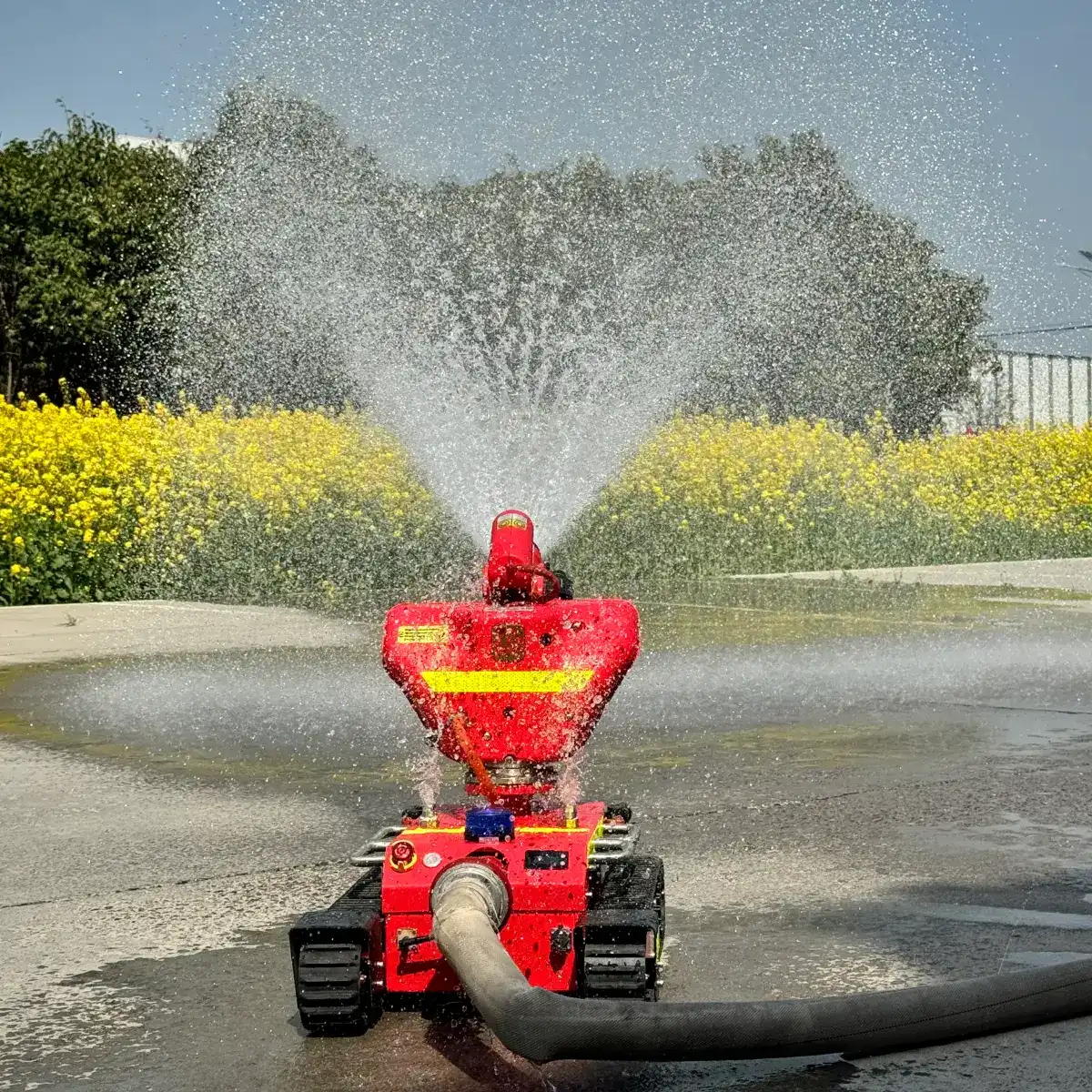
Compact fire escape robots are different because they are smaller and have special features that make them useful in tight spaces and dangerous situations. The smallest Fire Robot models are about 88 cm long, 48 cm wide, and 61 cm high when fully extended. These unmanned ground vehicles usually have dimensions that allow them to pass through standard doors and tight passageways. The unique feature is combining a strong tracked frame with a water monitor system that can be controlled from afar, allowing firemen to put out fires from a safe distance. Modern movable fire robots have flame-resistant rubber crawlers that keep them stable on surfaces that are full of garbage and keep interior parts from being exposed to radiant heat. Compared to regular firefighter gear, these units' small size makes them easier to store, faster to deploy, and better able to get into tight areas.
Core Operational Mechanisms and Technologies
Compact fire rescue robots are made up of a number of interconnected systems that work together to help people in emergencies. Electric servo motors let you precisely control movement through lithium battery power systems. They can work nonstop for up to 16 hours without load and for two hours of busy travel. With approach slopes of less than 40 degrees, the crawler system lets these units go up stairs and over objects up to 100 mm high. Signal transmission methods used by remote control systems can keep contact stable up to 200 meters away, even through smoke and building walls. The built-in water monitor can handle working pressures of 0.8 MPa and flow rates of 10 to 20 liters per second. It can also rotate 60 degrees horizontally and 70 degrees vertically. This mix of movement, sensors, and fire control technologies solves the important problem for the industry of getting into dangerous areas while keeping first responders as safe as possible.
Essential Safety and Performance Specifications
Professional buyers have to look at detailed safety specs that show how reliable the product will be in harsh circumstances. The IP65 protection grade makes sure that the unit can work in wet and dusty conditions, which is important when it comes to fire suppression water flow and smoke settings with a lot of particles. Temperature sensors with sound alarms keep an eye on the environment in real time, and normal LED light strips and flashlights let you work when there is no light. In normal setups, the working temperature range is between -20°C and +60°C. For cold climate operations, optional upgrades raise the lower limits to -40°C. International certificates like CE, TELEC, and TAF show that the product meets regional safety standards and requirements for electromagnetic compatibility. These performance factors have a direct effect on how reliable the robot can work in situations like chemical plant fires, tunnel accidents, airport emergencies, seaport accidents, steel mill operations, and factory workshop dangers where regular firefighting methods don't work.
Comparing Compact Fire Rescue Robots with Traditional Firefighting Solutions
Advantages in Speed, Maneuverability, and Accessibility
When you compare the smallest fire robot systems to regular fire trucks and larger robotic options, the movement benefits are clear right away in real-life situations. Traditional fire trucks need clear entry routes, a large enough turning radius, and stable ground. Because of these requirements, they can't be used in buildings that have fallen, facilities that are underground, or industrial sites with small passageways. Compact robots can move at speeds of 1.2 meters per second and can turn with no radius, which lets them get through debris fields and around objects that would stop regular cars. The ground clearance of about 40 mm lets you work on uneven areas and make cable runs that are typical in industrial settings. These units can be set up by a single person in just a few minutes, instead of the time it takes to place regular fire trucks and extend hose lines. Putting the water monitor right at the fire seat cuts down on water use while increasing the efficiency of suppression. This addresses worries about the environment and problems with water supplies that often come up during long firefighting operations.
Complementary Roles and Deployment Constraints
Even though small fire rescue robots have big practical benefits, they are not meant to replace all of the equipment that is already there. Instead, they are meant to be added to overall protection plans. Traditional fire cars still have important functions for managing large incidents, such as providing access to high platforms for water supplies and moving people from one place to another. Larger robotic platforms might be able to handle more water flow or have attachments that are designed for specific industry uses. The best way to deploy is to use small robots as the first line of defense. These robots can do scouting, find victims, and put out fires right away while the main firefighting troops set up defensive operations. Procurement teams should be aware that these robots have limitations, such as limited water carrying capacity that requires external supply links, battery recharge times during long operations, and the need for technical know-how for effective remote operation in stressful situations.
Cost and Performance Analysis
The cost of buying a compact fire rescue robot is only one part of its overall cost. Its operating worth and prices over its entire lifecycle are also taken into account. Maintenance costs for these units are usually lower than those for standard equipment because the mechanical systems are simpler, the electric drivetrain is reliable, and the flexible design of the parts makes it possible to fix them in the field. Improving the safety of employees leads to fewer injuries and lower settlement costs. Also, incidents can be contained more quickly, which limits damage to property and lost business time. Case studies from real chemical plants show that early activation of robots cut the spread of fires by 60% compared to situations where only traditional response methods were used. Industrial insurance companies are becoming more aware of this risk-reduction value and are adjusting premiums for facilities that keep robotic rescue capabilities. When deciding how to spend the money, budgeting choices should take into account investments in training, extra parts, and battery replacements on a regular basis. This is because quality units should last between 10 and 15 years.
Top Global Suppliers and Brands of Compact Fire Rescue Robots
Industry-Leading Manufacturers and Innovation Standards
On the global market for the smallest fire robot, there are a number of well-known companies that are known for their cutting-edge technology, high quality standards, and large service networks. SISANLIN Group, which does business under the FourRobot® name, has become a leader in robotics and engine research. It is now a one-stop shop for all things related to fire robots, engines, drones, and other rescue tools, including research and development, production, marketing, and maintenance. With its bright red frame, all-terrain flame-resistant rubber crawler system, and full sensor integration, including thermal imaging capabilities, the company's portable fire robot sets the bar for the industry. With ready stock kept in carefully placed warehouses and certifications that cover CE, TELEC, and TAF standards, the maker shows that they are committed to making their products available on a global scale. European companies that make explosion-proof versions for industrial uses and North American companies that focus on military-grade ruggedization for defense sector needs are also well-known sources.
Essential Supplier Evaluation Criteria
To make sure long-term partnerships work, business-to-business buyers need to look at sellers in more ways than just the product specs. Most compact fire rescue robots come with warranties that cover production flaws and broken parts for 12 to 24 months. Some providers are giving longer warranties to show that they are confident in the quality of the build. Due to the technical nature of robotic systems, after-sales support infrastructure is very important. This means that providers must keep regional service centers staffed with trained techs who can do repairs in the field and train operators. Instead of depending on marketing promises, certification validity should be checked by reviewing direct paperwork and making sure it meets the legal requirements of the target market. Logistical dependability includes things like the availability of spare parts, the supplier's ability to handle big orders for large-scale rollout projects, and the average lead time for custom setups. Companies that use quality management in all steps of production—from research and development to off-site ordering, material sourcing, and service after the sale—show organized ways to make sure their products will be reliable.
Contacting Suppliers and Navigating Inquiry Processes
To engage suppliers effectively, you must first write down clear requirements that allow makers to suggest the best options. Initial questions should include planned rollout situations, environmental conditions, needed extras, estimated quantities, and expected delivery dates. When compared to third-party wholesalers, direct contact with the maker usually leads to better pricing and more customizable options. However, in some markets, approved dealers may offer better regional support. When procurement professionals reach out to suppliers like Fourobot®, they should request technical documentation, including user manuals, maintenance schedules, training materials, and case studies demonstrating successful product deployment in similar applications. The amount of help buyers will get throughout the lifecycle of a product is often a good indicator of how well suppliers respond to initial inquiries. Requesting building trips, seeing live demonstrations, and talking to current customers are all good ways to find out what a provider can do before committing to big financial investments.
Procurement Guide – How to Buy the Smallest Fire Robot
Pricing Structures and Cost-Performance Balance
Prices for the smallest fire robots vary a lot depending on their features, configurations, and where the seller is located. This means that buying professionals have to set clear priority levels to balance cost with performance needs. The most affordable price range for city offices on a tight budget that want to start using robots is entry-level units with basic remote controls and standard water monitors. In mid-range setups, there are better sensor sets with thermal imaging, batteries that can last longer, and specialty accessories like foam tube systems for chemical fire situations. Premium options come with advanced self-navigation, danger assessment based on AI, combined communication systems that allow multiple units to work together, and military-grade, ruggedized parts. Prices are affected by where the goods are made and how much it costs to get the materials, hire workers, and ship them. For standard configurations, mainland China production is usually more cost-effective, while North American and European manufacturers charge more for special certifications and better local support systems.
Selecting Purchase Channels and Order Workflows
When choosing between direct dealer contacts and online markets, there are trade-offs between ease of use, clear price, and the depth of the relationship. Online business-to-business (B2B) platforms let you compare many suppliers and use standard transaction processes. However, they may limit the amount of customization and expert advice that can be given. Directly working with manufacturers lets you negotiate specifics, inspect facilities, and set up long-term relationship frameworks that are necessary for businesses that are planning fleet deployments or OEM integration projects. Usually, an order starts with submitting a requirement specification. Next comes reviewing the technical plan and, if possible, evaluating a trial unit. Next comes negotiating the contract, which includes payment terms and delivery dates, and finally finalizing agreements for after-sales support. Customization options that are important for OEM integrations include mounting rails and sliders for retrofitting, different standard hose couplings that match existing infrastructure, power connectors that work with local electrical systems, and specialized accessories like wheeled stretchers that can be used for more than one emergency response task.
Warranty Coverage and Service Agreements
Full guarantee coverage and long-term service agreements help clients make sure that their fire rescue robot investments will continue to work reliably and help them get the most out of their investments over their entire lifetime. Standard guarantee terms should cover replacing parts that were damaged during production, getting access to expert help for troubleshooting, and software changes that fix bugs or add security. Longer service contracts might include regular preventative maintenance, testing and calibration once a year, early access to extra parts, and education for operators when user organizations change staff. Because they are replaceable and lose performance in different ways than structural parts, battery systems usually need their own guarantee consideration. Contracts for buying things should include promises about how quickly they will fix major problems, the availability of a loaner unit while the main one is being fixed, and the type of paperwork that needs to be kept for service records to meet insurance and governmental requirements. Organizations that take care of more than one unit can benefit from fleet management support services, which help with things like coordinating repair schedules, tracking how equipment is used, and making decisions about when to replace things.
Applications and Future Trends of Compact Fire Rescue Robots
Critical Use Cases in Urban and Industrial Firefighting
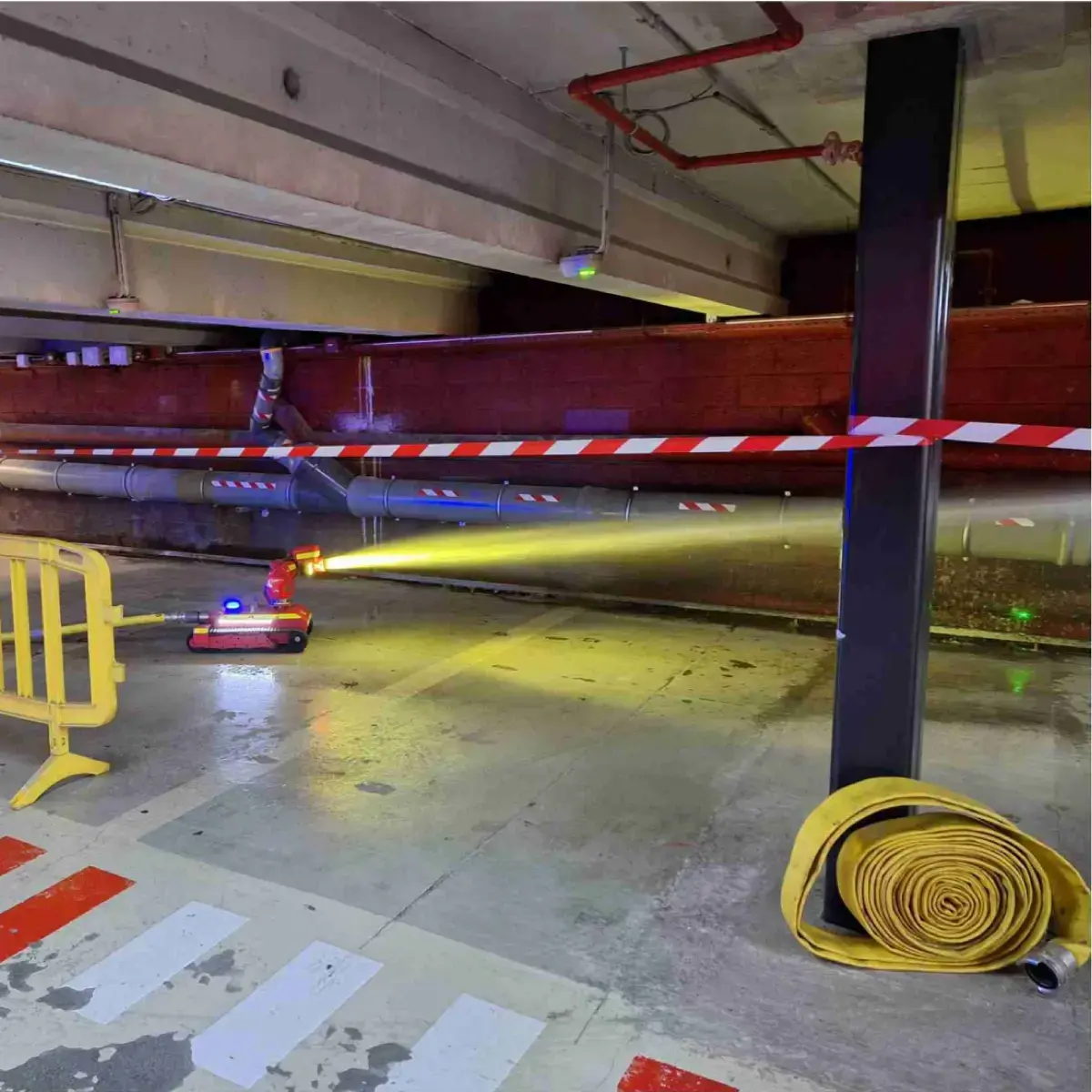
There are many real-life situations where small fire relief robots can be used, including places that are hard to get to or where there are safety risks that make regular firefighters too dangerous. Urban uses include fires in high-rise buildings where robots get through the stairwells before the firefighters do, accidents in train tunnels where toxic smoke makes it impossible for people to get in, and fires in underground parking garages involving electric cars that need constant cooling delivery. Industrial settings show especially compelling use cases. For example, chemical plants use robots to help with the first response to reactor fires or spills involving dangerous materials. Refineries use explosion-proof versions for fires in the hydrocarbon processing area, and steel mills use heat-resistant units for emergencies in the furnace area. Airports use these robots to fight jet fuel fires that need to be put out right away before traditional equipment can be moved. At seaports, small units that can be deployed through tight hallways and hatch holes are useful for operations. Factory workshop applications deal with machinery fires in places where there is a lot of equipment and normal entry ways can't get to it.
Emerging Technological Advancements
The smallest fire robot is evolving toward more automation, better instrument integration, and the ability to coordinate multiple units, which will change the ways that operations can be done. Autonomous guidance systems powered by AI are currently being developed so that robots can map out new areas, find the best ways to get there, and adjust to changing conditions as the fire spreads and buildings fall apart. These units go from being simple water delivery platforms to full surveillance and evaluation tools with the help of improved sensor arrays that combine technologies like thermal imaging, gas detection, tracking of structural integrity, and victim location. Improvements in communication protocols make it easier for multiple robots to work together and for incident command systems to connect with them. This allows for centralized tactical control across complicated disaster scenes. Improvements in battery technology offer longer operational durations and faster recharge cycles, which will cut down on the time between deployment cycles during long events. New developments in materials science for thermal protection and structural composites allow for smaller form factors with the same level of heat resistance. This could lead to the creation of even smaller versions for specific uses, such as getting inside an airplane or penetrating industrial equipment.
Strategic Foresight for Supplier Collaboration
By knowing about technology trends, business-to-business (B2B) stakeholders can plan ahead for practical benefits, changing buying criteria, and models for working together with suppliers that improve safety, efficiency, and competitive edge in fire rescue robots. As shown by their patent portfolios and partnerships with research institutions, forward-thinking sellers are always putting money into research and development programs that meet new business needs. When purchasing relationships go beyond just buying tools, they can turn into strategic partnerships that give companies early access to next-generation features, the chance to take part in beta testing programs that shape product development, and better support when supplies are low. When companies work with the same source for a long time, they can share institutional knowledge, which helps the companies understand how their products will be used and suggest ways to make them better based on feedback from operations. Moving toward platform-based product designs that support modular capability updates lets you accept new technologies in small steps without replacing whole units. This protects your capital investments and keeps your technology up to date as new technologies come out.
Conclusion
If you want to buy compact fire rescue robots from the right company, you need to carefully look at their technical specs, credentials as a manufacturer, and long-term support options that will make sure they work well in all kinds of emergency situations. We looked at how the smallest fire robot platforms give firefighters access to confined and dangerous areas that has never been possible before. We also compared their benefits to traditional firefighting methods, wrote profiles of leading global suppliers like fourobot®, and gave B2B buyers practical buying advice. When advanced robots, thermal imaging, and remote operation technologies come together, they create strong benefits for fire departments, industrial facilities, and emergency management groups that care about keeping people safe and quickly containing incidents. As this technology keeps getting better, with AI-driven autonomy and better sensor integration, smart supplier relationships help companies stay up-to-date on technology while protecting their capital investments through modular upgrade paths.
FAQ
What are the primary advantages of compact fire rescue robots over traditional firefighting equipment?
Compact fire rescue robots have many important benefits, such as making people safer by keeping them out of dangerous environments like high heat and harmful fumes during the initial stages of a fire attack. Their small size lets them get through debris fields, narrow hallways, and tight areas that regular fire cars can't get to. With rapid deployment, suppression actions can start in minutes instead of taking hours to set up for standard positioning of equipment and release of hose lines. The exact placing of water monitors from a distance cuts down on water use by directing it directly to fire seats and reducing damage to other areas.
How should procurement teams evaluate potential suppliers?
Effective supplier evaluation encompasses verification of manufacturing certifications confirming compliance with international safety standards; assessment of after-sales support infrastructure, including regional service centers and spare parts availability; review of warranty terms and service agreement options; examination of existing customer references demonstrating successful deployments in similar applications; and evaluation of technical support quality through initial inquiry responsiveness. Companies should give more weight to suppliers who show consistent quality control during the entire creation and production process.
What key safety certifications should buyers verify?
Important safety certifications include CE marking, which shows that the product meets European Union standards, IP65 or higher ratings for water and dust resistance, electromagnetic compatibility testing to make sure it works without interference from industrial equipment, thermal endurance testing to make sure the electronics will survive being exposed to high temperatures, and regional-specific certifications like TELEC for wireless communication systems. Battery systems should have different approvals that cover the safety standards for transporting and storing lithium-ion batteries.
Partner with FourRobots® for advanced compact fire rescue solutions.
SISANLIN Group, doing business as fourobot®, has a lot of experience making robots and emergency equipment that can help you with your efforts to make fire safety better. Our portable fire robot platform has proven all-terrain movement, the ability to throw water 45 meters, and 16 hours of operating endurance all in a small 68 kg package that is ready to be sent out right away. As a dedicated smallest fire robot maker, we follow quality management standards at every stage, from the initial study to service after the sale. This way, you can be sure that your investment will work reliably for a long time. Because we care about the environment and are always coming up with new ideas, you can count on us to be your strategic partner for both your current purchasing needs and the adoption of new technologies as your business changes. When you mix ready-to-ship stock with a full portfolio of certifications, you can quickly launch across global markets. Get in touch with our team at sales@fourobot.com.cn to talk about your specific needs and find out how our one-stop solution method can help you with your business problems.
References
1. National Fire Protection Association. "NFPA 2400: Standard for Small Unmanned Aircraft Systems (sUAS) Used for Public Safety Operations." Quincy: NFPA Publications, 2019.
2. International Organization for Standardization. "ISO 18646-1:2016 Robotics — Performance criteria and related test methods for service robots — Part 1: Locomotion for wheeled robots. "Geneva: ISO Standards, 2016.
3. Chen, W., Zhang, H., and Liu, M. "Thermal Management and Safety Design for Fire-Fighting Robots in High-Temperature Environments." Journal of Robotic Systems and Industrial Automation, vol. 45, no. 3, 2021, pp. 287-304.
4. European Committee for Standardization. "EN 1846-3:2013 Firefighting and Rescue Service Vehicles — Part 3: Permanently Installed Equipment — Safety and Performance." Brussels: CEN Publications, 2013.
5. Peterson, R.K. and Thompson, J.L. "Economic Impact Analysis of Robotic Firefighting Systems in Industrial Facilities." Industrial Safety Economics Quarterly, vol. 28, no. 2, 2022, pp. 156-178.
6. Global Fire Equipment Market Research. "Compact Firefighting Robots: Technology Assessment and Market Forecast 2023-2030. "London: Fire Industry Research Institute, 2023.
Learn about our latest products and discounts through SMS or email